
Sectors8 min read
Taxi and private hire texts: booked, on the way, outside
England had 290,000 licensed private hire vehicles in April 2026, up 13% since 2024. The taxi and private hire texts a firm sends, and how dispatch sends them.
In short
- England had 290,000 licensed private hire vehicles and 52,300 licensed taxis on 1 April 2026, a 13% rise and a 7% fall since 2024, according to the Department for Transport.
- There were 19,000 private hire operator licences in England on 1 April 2026, up 17% from 16,300 in 2024, and 417,300 taxi and private hire driver licences.
- DfT's statutory standards say operators should record each booking, including the driver's name, licence number and vehicle registration, and suggest keeping the records for at least 6 months.
- TfL says a London minicab booking confirmation, which can be a text, must include at least the number plate, the driver's first name and licence number, and a photo of the driver where the passenger can receive it.
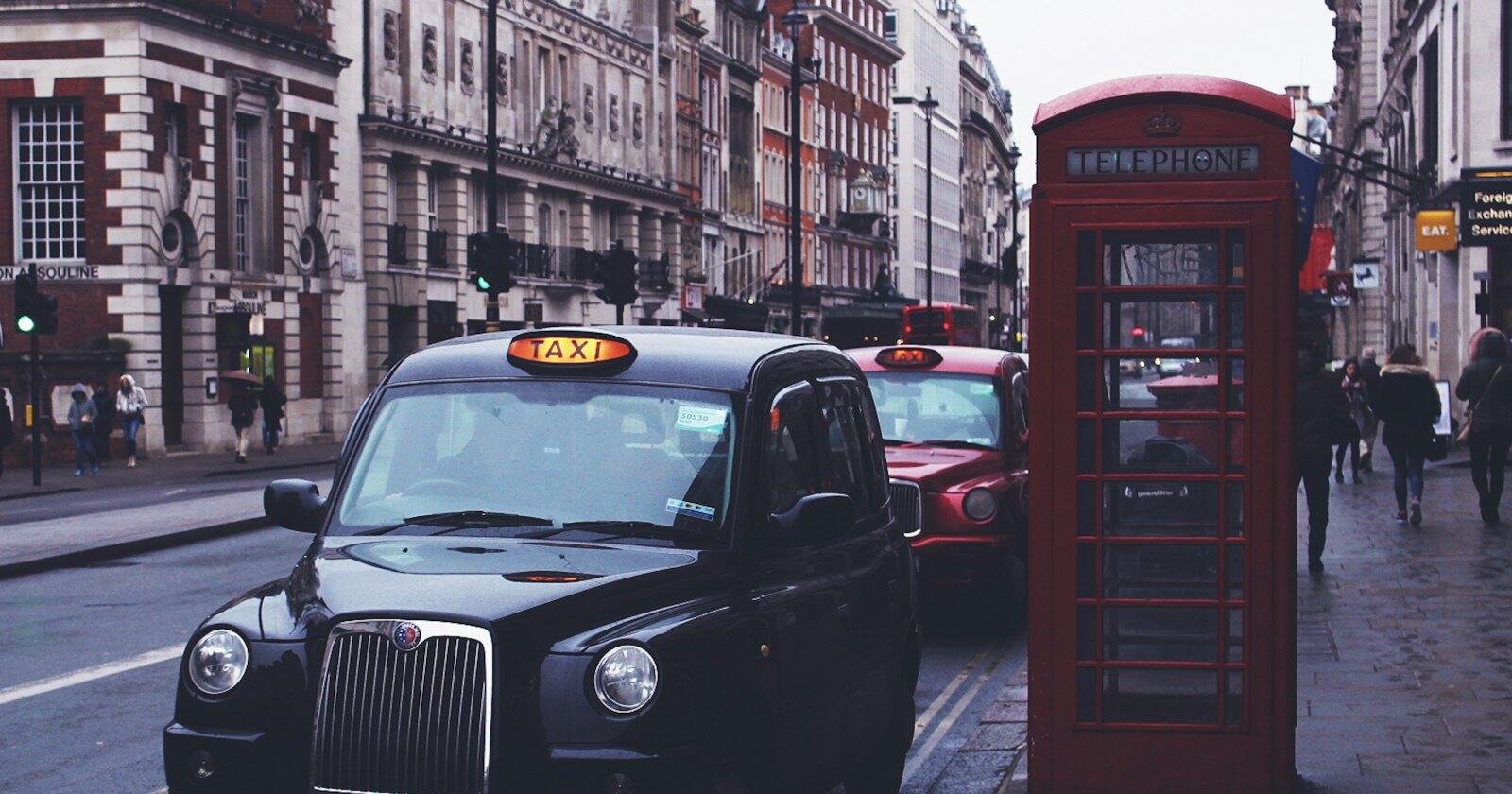
Every private hire firm sends the same three taxi and private hire texts, hundreds of times a night: you're booked, the car's on its way, the car's outside. They're about the plainest messages a business ever sends, and they carry more weight than they look. The passenger uses them to decide whether the car pulling up is the right one, the dispatcher uses them to avoid ringing every customer twice, and in London the booking text can be the confirmation the regulator requires.
There are more firms sending them than ever. The Department for Transport counted 290,000 licensed private hire vehicles in England on 1 April 2026, up 13% on 2024, and 19,000 private hire operator licences, up 17%. Licensed taxis went the other way, down 7% to 52,300. This post covers what the figures show, what the licensing rules say about bookings, the texts themselves, and how a dispatch system sends them through an SMS API.
What the DfT figures show
DfT's survey of licensing authorities is a snapshot taken on 1 April. The 2026 release counts 342,300 licensed taxis and private hire vehicles in England, "a 9% increase from 2024 and an 85% increase from 2005", and 417,300 driver licences. Of those licences, 71% were for private hire only, 7% for taxis only and 20% covered both.
- Private hire vehicles
- Taxis
The survey ran every two years until 2017 and was not run in 2025. Figures are at 31 March up to 2022 and 1 April from 2023. Vehicles are counted where they are licensed, which is not always where they work.
Source: DfT, Taxi and private hire vehicle statistics 2026, table TAXI0101a
See the figures as a table
| Private hire vehicles (k) | Taxis (k) | |
|---|---|---|
| 2005 | 120.4 | 64.2 |
| 2007 | 129.3 | 68.9 |
| 2009 | 146.2 | 71.1 |
| 2011 | 150 | 73 |
| 2013 | 150.3 | 73.1 |
| 2015 | 166.6 | 76.2 |
| 2017 | 205.3 | 75 |
| 2018 | 212.4 | 73 |
| 2019 | 221.4 | 70.6 |
| 2020 | 230.8 | 67.8 |
| 2021 | 192.8 | 58.3 |
| 2022 | 202.6 | 58 |
| 2023 | 232.2 | 57.2 |
| 2024 | 256.6 | 56.4 |
| 2026 | 290 | 52.3 |
The split has moved a long way. In 2005 England had 120,400 private hire vehicles and 64,200 taxis. Private hire passed 200,000 by 2017, dipped to 192,800 in 2021, then climbed to 290,000 this year, while taxis peaked at 76,200 in 2015 and have fallen in every survey since. Outside London, private hire grew 20% in two years, to 196,600 vehicles; London's 93,300 grew 1%.
One caution before reading too much into local figures. DfT notes that drivers can take a licence from an authority "outside the area in which they predominantly operate", so the counts show where vehicles are licensed, which isn't always where they work. Wolverhampton alone licensed 13.1% of all private hire vehicles in England, around 38,000 of them, against roughly 100 taxis.
Taxis, private hire and the booking
The legal difference shapes the texts. Taxis, or hackney carriages, "can be hailed in the street" as well as booked. Private hire vehicles can't: DfT's release says they "must be pre-booked and cannot use taxi ranks", and "It is illegal for PHVs to ply for hire". DfT's statutory standards add that every private hire journey goes through "a licensed private hire vehicle operator" under "a triple licensing lock", with operator, vehicle and driver all licensed by the same authority.
So for private hire, the booking is the whole service, and the operator has to keep a record of it. The standards point to section 56 of the Local Government (Miscellaneous Provisions) Act 1976, which requires operators to keep records of "the particulars of every booking", and the statutory standards say authorities should require at least:
- the passenger's name, the time of the request, the pick-up point and the destination;
- the name of the driver, the driver's licence number and the vehicle registration;
- the names of whoever took the booking and whoever dispatched the car.
The standards suggest keeping booking records "for a minimum of 6 months". Most of that list is also exactly what a passenger wants in a text. The driver's name and the registration are what they check at the kerb.
What a London booking confirmation must say
Transport for London is the licensing authority in the capital, and its safer travel advice is specific. Passengers "must receive a booking confirmation", which can come "by text message, app, email" or as a paper receipt in a minicab office, and it "must contain at minimum":
- the number plate;
- the first name of the driver;
- the driver's private hire licence number;
- "A photo of the driver where the passenger can receive it".
TfL then tells passengers: "If the driver or the car picking you up isn't the same as in your booking confirmation, don't get in the car." That sentence is the reason the allocation text matters. A text can't carry a picture, so a firm confirming by SMS needs to send the photo another way, typically a link in the text to a page that shows it, or through its app. Outside London the rules depend on the local authority's licence conditions, but the same details make sense everywhere.
Taxi and private hire texts, from booking to drop-off
Written for a fictional firm, Brookside Cars. None is marketing, so none needs an opt-out line.
Booked, straight after the call or the web booking:
Brookside Cars: booked for 22:40 tonight from The Crown, Mill Lane to 14 Elm Road. We'll text the car and driver details once allocated. Reply C to cancel.
Allocated, with what the passenger needs to check:
Brookside Cars: your driver is Sam, silver Toyota Corolla AB12 CDE, licence 01234. Check the car and driver match before you get in. Driver photo: brooksidecars.co.uk/d/7Kq2
On the way, with an honest estimate:
Brookside Cars: Sam is on the way, about 6 minutes. Silver Corolla AB12 CDE.
Outside:
Brookside Cars: your car is outside The Crown now. Silver Corolla AB12 CDE. Sam will wait 5 minutes.
And the one that saves a complaint, when things slip:
Brookside Cars: sorry, Sam is running about 10 minutes late due to traffic on the ring road. Reply C if you'd like to cancel at no charge.
The details repeat from text to text, on purpose. A passenger standing outside a pub at closing time won't scroll back to find the registration, so every text that matters at the kerb carries the car and plate again. Keep the times concrete ("about 6 minutes", "22:40"), and keep the firm's name first so the text can't be mistaken for anyone else's.
Wiring dispatch to an SMS API
Most dispatch systems already know every state a booking passes through: created, allocated, driver en route, arrived, passenger on board, completed. Each state change is a natural trigger for a text, and the cleanest way to send them is a call to an SMS API from the dispatch software itself.
With CaptiFi Connect that's a POST /messages with the passenger's number in to, the text in body, and two extras that matter for dispatch:
- an
Idempotency-Keybuilt from the booking id and the state, such asjob-58213-outside. If the driver taps "arrived" twice, or the dispatch server retries after a dropped connection, the second request returns the first answer and nothing is sent twice. Our post on sending a text exactly once explains why this matters; - a
client_refset to the booking id, which comes back on every webhook for that text, so a failure can be matched to the job without looking anything up.
A single text sent through the API goes when you send it, at any hour, because quiet hours on CaptiFi Connect only hold back campaign and list sends; a 03:00 airport pickup gets its texts at 03:00. Each key can make 20 requests a second with bursts up to 40, far more than a busy Friday needs, and a 429 comes back with a Retry-After header if anything ever does hit the limit. New accounts can send straight away, but until the account is approved a person reads each live text before it goes, so get approval sorted before you switch dispatch over. Build it first with a test key, which sends nothing and costs nothing but still fires the webhooks.
Replies and failed texts
Passengers reply to these texts. "Running 2 mins late", "I'm at the side door", "can he come round the back". Those replies need to reach the dispatcher, quickly, so the texts should go from a number people can reply to. Texts from a sender name such as BROOKSIDE look tidier, but nobody can reply to them. A dedicated mobile number keeps every passenger's replies coming back to your account, and it costs 250 credits every 30 days.
Replies arrive in the two-way inbox and, through webhooks, in your own system as message.received events with the text and the number it came from. Match on the number and the most recent open booking, and show the reply on the dispatcher's screen next to the job. A reply of C can be handled the same way, by your system, so that a cancellation really does cancel the job.
The message.failed webhook matters more here than in most businesses. If the "outside" text fails, the passenger doesn't know the car has arrived, and the driver is about to log a no-show. A failed allocation or outside text should put a phone icon next to the job, so the driver or dispatcher calls.
Is any of this marketing?
No, as long as it stays about the journey. The ICO describes service messages as ones that "aren't promotional but are for administrative or customer services purposes", and a text saying your car's outside is about as administrative as it gets. The catch is in the same guidance: "If your service message has elements that are direct marketing, even if that is not the main purpose of your message, then it will count as direct marketing." A line at the bottom of the outside text saying "10% off your next airport run" turns it into a marketing text, which needs consent or the soft opt-in and an opt-out. Keep offers for a separate message sent only to people who have agreed to them.
Common questions
Can a taxi booking system send texts automatically?
Yes. Most dispatch systems can call an SMS API when a booking changes state, for example when a driver is allocated or arrives. Each call sends one text to the passenger, and an idempotency key built from the booking and the state stops a repeated tap or retry from sending it twice.
What should a minicab booking confirmation text include?
In London, TfL says a confirmation must include at least the number plate, the driver's first name, the driver's private hire licence number and a photo of the driver where the passenger can receive it. Elsewhere it depends on local licence conditions, but the same details help passengers check they're getting into the right car.
Do taxi firms need consent to send booking texts?
Booking, allocation and arrival texts are service messages, so the PECR marketing consent rules don't apply. Adding a promotion to one of them makes it a marketing text, which then needs consent or the soft opt-in and an opt-out.
Can passengers reply to taxi booking texts?
They can if the texts come from a mobile number. Texts sent from a sender name, such as the firm's name, can't be replied to, so firms that want "I'm at the side door" replies should send from a dedicated number and route replies to the dispatcher.
Sources
Read for this post on 4 November 2026.
- DfT: Taxi and private hire vehicle statistics, England: 2026 (13 August 2026)
- DfT: Taxi and private hire vehicle statistics 2026, data tables (ZIP)
- DfT: Statutory taxi and private hire vehicle standards
- TfL: Safer travel at night, taxis and minicabs
- ICO: direct marketing guidance, identifying direct marketing
- CaptiFi Connect: API reference
Written by the CaptiFi Connect team. Published 4 November 2026. More in Sectors
Send your first text this week
Set up your account and contacts now. Until we've approved it, a person reads each text before it goes out.