
Sectors9 min read
Vehicle recall texts for car dealers
DVSA's recall file lists 499 vehicle safety recalls launched in 2025. How dealers use recall texts alongside the letters, and what the code of practice expects.
In short
- DVSA's published recall file lists 499 vehicle and component safety recalls launched in 2025, up from 410 in 2023 and 320 in 2015, counted by recall number.
- DVSA's code of practice on vehicle safety defects says three notifications per motorist would normally be seen as reasonable for a recall, if response rates are broadly in line with the agreed plan.
- A recall is normally closed for reporting when about 90% of the vehicles believed to be in service have been fixed, and producers report response rates to DVSA every three months until then.
- GOV.UK says owners will not usually have to pay for recall repairs or parts, and anyone can check a car for unfixed safety recalls using its registration number.
- The ICO says a service message that includes any direct marketing counts as direct marketing, so a recall text that also promotes a service loses its status as a service message.
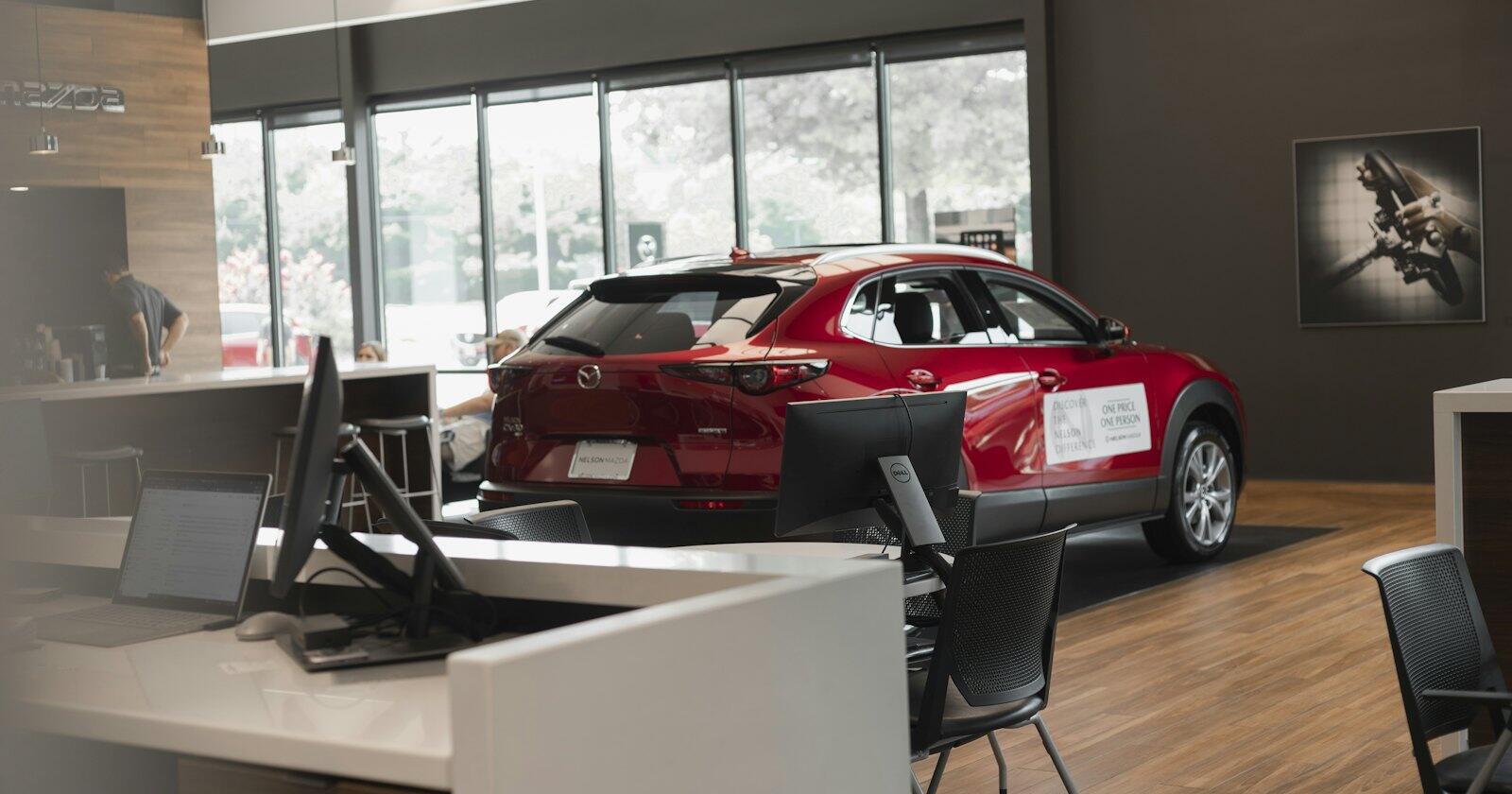
When a manufacturer confirms a safety defect, the letters go out to registered keepers and the dealers get a list of chassis numbers. Then the waiting starts. A recall only counts as done when the car has been through a workshop, and plenty of the letters end up behind the clock on the mantelpiece. Vehicle recall texts are the dealer's way of turning a letter into a booking: a short message from a name the customer recognises, sent to the number they gave when they bought or serviced the car.
DVSA's own recall file shows how often this comes up. It lists 499 safety recalls launched in 2025, covering cars, motorcycles, commercial vehicles, trailers and parts. This post covers how the UK recall process works, what DVSA's code of practice expects from the people contacting owners, and how to write and run recall texts that people trust enough to act on.
How a vehicle recall works in the UK
The rules sit in DVSA's "Vehicle safety defects and recalls: code of practice", last updated in March 2024. It defines a safety defect as "a failure due to design and/or construction, which is likely to affect the safe operation of the product" and poses "a significant risk to the driver, occupants and others". Once a producer or distributor confirms one, "there is an obligation to notify DVSA", and they don't have to wait until a fix is ready.
The producer owns the remedy, and the code says the distributor "has a responsibility to co-operate". In practice that's the dealer network. A few parts of the code bear directly on how owners are contacted:
- DVSA "must be given the opportunity to comment on the content of the communication" before a recall starts.
- Producers can ask DVLA for "names and addresses of the registered keepers of affected vehicles", subject to data protection rules and contracts with DVLA.
- "A number of communications may be necessary", and "it would be expected 3 notifications per motorist would be seen as reasonable" if response rates are in line with the plan.
- Producers "should take all reasonable steps to locate and rectify products", which includes "letters to registered keepers and advertising", but "may also include social media and similar". They're "encouraged to be innovative" in how they get people to take part.
- Response rates are reported to DVSA "at three monthly intervals". A recall closes for reporting when "a high proportion of vehicles (normally 90%) believed to be in service have been rectified", though the recall itself stays live.
DVLA's data gives names and addresses, not mobile numbers. The dealer that sold or serviced the car often has the mobile number, which is one reason the follow-up so often lands on the dealer's desk. And the code expects dealers to act when a recalled car turns up for something else: "it would normally be expected that recall work should be done", or failing that, the customer should be briefed on what to do meanwhile and the work planned.
How many recalls there are
DVSA publishes every recall in a downloadable file, one row per model affected, with the launch date, the recall number, the make, the concern, the defect and the remedy. Counting distinct recall numbers by year gives the chart below.
Counted as distinct recall numbers by launch date. Covers cars, motorcycles, commercial vehicles, trailers and components; one recall can cover several models. 2026 had 355 by 28 October.
Source: DVSA, vehicle recalls file (CSV), read 4 November 2026
See the figures as a table
| Recalls | |
|---|---|
| 2015 | 320 |
| 2016 | 390 |
| 2017 | 413 |
| 2018 | 430 |
| 2019 | 508 |
| 2020 | 500 |
| 2021 | 509 |
| 2022 | 440 |
| 2023 | 410 |
| 2024 | 467 |
| 2025 | 499 |
There were 320 recalls launched in 2015, rising past 500 in 2019 to 2021, then 440 in 2022, 410 in 2023, 467 in 2024 and 499 in 2025. By 28 October 2026 another 355 had been launched. The file mixes everything (a single recall can cover one batch of motorcycles or several car models at once), so these are counts of recall campaigns. They aren't counts of vehicles. For a franchised dealer the useful number is the one the manufacturer sends: how many of the affected VINs are on your books, and how many are still open.
DVSA doesn't publish completion rates for individual recalls. The 90% closure threshold in the code is the clearest public statement of what "finished" means.
Where the owner hears about it
Owners have more routes in than they used to. GOV.UK's recall checker lets anyone "use the car registration number to check if it's been recalled", showing "safety recalls that have not been checked or fixed" alongside the MOT history. The same page says owners "will not usually have to pay for any repairs or parts", which is worth saying in your text, because people who think they're about to be charged put it off.
The government's MOT reminder service may mention it too: GOV.UK says "Your reminder might tell you if your vehicle has been recalled for a safety reason. This depends on the manufacturer." And DVSA's MOT history API, which garages use to look up test dates, returns a hasOutstandingRecall field for each vehicle, with four values: Yes ("at least one recall which has not yet been fixed"), No, Unknown and Unavailable. An independent garage can use that to spot an open recall when a car is booked in for something else and tell the owner to contact the franchised dealer.
So by the time your text arrives, the customer may have had a letter, an MOT reminder line and nothing else, and what they need from you is an easy way to book.
Is a recall text a marketing text?
A recall notice is about as clear a service message as a business can send. The ICO's guidance describes service messages as ones that "aren't promotional but are for administrative or customer services purposes", and says a message with "a neutral tone" that "simply gives information that they need to know as part of their relationship with you" is more likely to be one. A safety recall is information the owner needs.
The catch is in the next line of the guidance: "If your service message has elements that are direct marketing, even if that is not the main purpose of your message, then it will count as direct marketing." So a recall text that adds "and while it's in, why not book a service at 20% off" has become marketing, which then needs consent or the soft opt-in and an opt-out line. Keep the recall text to the recall. If you want to offer anything else, do it face to face when the car's in. Our post on service and marketing borderline cases has more examples of where the line falls.
One practical wrinkle: if a customer once replied STOP to your marketing, CaptiFi Connect will have suppressed their number, and a send to it is refused with the reason opted_out. That's deliberate, and it means the recall for that customer goes by letter or phone call. Keep a note of it so nobody assumes the text went.
Writing a recall text people trust
Recall texts have a problem marketing texts don't: they sound like a scam. "Your vehicle has a safety defect, click here" is close to what a fraudster would write. A few habits make yours read as genuine.
- Put the dealer's name first, and send from a registered sender name or the number the customer already has for you.
- Name the car and the registration, so the customer knows you hold their details and it isn't a guess.
- Say the repair is free. GOV.UK's own page says owners usually won't pay, and saying it removes the obvious worry.
- Don't ask for payment, card details or personal information.
- Give a way to check that doesn't depend on trusting you: GOV.UK's recall checker by registration.
- Use a link to your own domain if you use one at all. Our post on links in texts covers why.
Only say "do not drive" if the manufacturer's notice says so. GOV.UK says that where a vehicle has a serious safety defect "the manufacturer will write to you to tell you what to do", and the dealer's text should repeat that instruction, not invent its own.
The recall texts, start to finish
Written for a fictional dealer, Harwood Motor Group. None of these carry an opt-out line, because they're service messages; if you add one anyway, nothing breaks.
The first notice, sent once the manufacturer's letters have gone:
Harwood Motor Group: your car (AB12 CDE) is part of a manufacturer safety recall for the rear seat belt buckle. The repair is free and takes about an hour. Reply BOOK and we'll text you some times.
The follow-up, three or four weeks later if there's been no booking:
Harwood Motor Group: we haven't yet seen your car (AB12 CDE) for its free seat belt recall repair. You can check the recall on GOV.UK by registration. Reply BOOK or call us on the number on your service invoice.
Confirmation, once booked:
Harwood Motor Group: recall repair booked for Thu 19 Nov at 08:30. About an hour; you're welcome to wait. Reply if you need to change it.
And the one that closes the loop:
Harwood Motor Group: the recall work on your car (AB12 CDE) is done and recorded. Nothing to pay. Thanks for bringing it in.
The code's "3 notifications per motorist" is a fair guide for the first two kinds combined with the manufacturer's letters. Past that, pick up the phone.
Running it from the dealer's desk
The manufacturer's list of VINs needs matching to your own customer records, which is a spreadsheet job most dealer systems can do. Export the matches with name, mobile, model and registration, import the CSV into CaptiFi Connect with column mapping, and send the first notice to that list with the registration and model as merge fields.
Replies are where the work is. With a BOOK keyword, CaptiFi Connect sends your booking reply automatically, and everything else lands in the two-way inbox for the service desk. Delivery reports show which texts reached a handset and which failed, so the failures go on the phone list straight away. Message history exports as CSV, which helps when the manufacturer asks for the contact attempts behind your response figures. When the follow-up date comes round, send it only to the customers who haven't booked; a separate list for the bookings makes that a two-minute job.
Common questions
Should car dealers text customers about vehicle recalls?
Texting is a sensible addition to the manufacturer's letters. DVSA's code of practice encourages producers and distributors to use all reasonable steps to reach owners, including methods beyond letters, and expects about three notifications per motorist to be reasonable. The text should stick to the recall and how to book it.
Do recall texts need consent under PECR?
A recall notice with no promotional content is a service message, so the PECR marketing rules don't apply to it. The ICO says any marketing element turns a service message into direct marketing, so leave offers and upsells out of recall texts.
How can a customer check if their car has an open recall?
GOV.UK's "Check if a vehicle, part or accessory has been recalled" service shows unfixed safety recalls by registration number, along with the MOT history. Owners can also check by make, model and year if they don't know the registration.
Who pays for a vehicle recall repair?
GOV.UK says owners will not usually have to pay for any repairs or parts. The manufacturer is responsible for the remedy, and the work is normally carried out by its dealer network.
Sources
Read for this post on 4 November 2026.
- DVSA: Vehicle safety defects and recalls, code of practice (updated 6 March 2024)
- GOV.UK: Check if a vehicle, part or accessory has been recalled
- DVSA: vehicle recalls file (CSV)
- DVSA: MOT history API, API specification (OpenAPI)
- GOV.UK: Get, view or stop MOT reminders
- ICO: direct marketing guidance, identifying direct marketing
Written by the CaptiFi Connect team. Published 4 November 2026. More in Sectors
Send your first text this week
Set up your account and contacts now. Until we've approved it, a person reads each text before it goes out.