
Rules and trust8 min read
Aesthetics clinic texts and the Botox ad ban
Botox advertising to the public is banned in the UK. Which aesthetics clinic texts count as ads, how to word recalls and offers, and the new DHSC proposals.
In short
- Regulation 284 of the Human Medicines Regulations 2012 says a person may not publish an advertisement that is likely to lead to the use of a prescription only medicine.
- The ASA says it considers almost every reference to Botox and other botulinum toxin products in traditional media as promoting a prescription only medicine, breaching CAP Code rule 12.12.
- The ASA's Botox FAQs say a price promotion such as 20% off or buy two areas get one free is likely to breach the CAP Code, even if Botox is not named.
- Since 1 October 2021 it has been an offence in England to administer botulinum toxin, or a filler injection for a cosmetic purpose, to anyone under 18.
- In DHSC's 2023 consultation on non-surgical cosmetic procedures, 62.6% of 11,753 answers agreed that high-risk procedures should be restricted to qualified, regulated healthcare professionals.
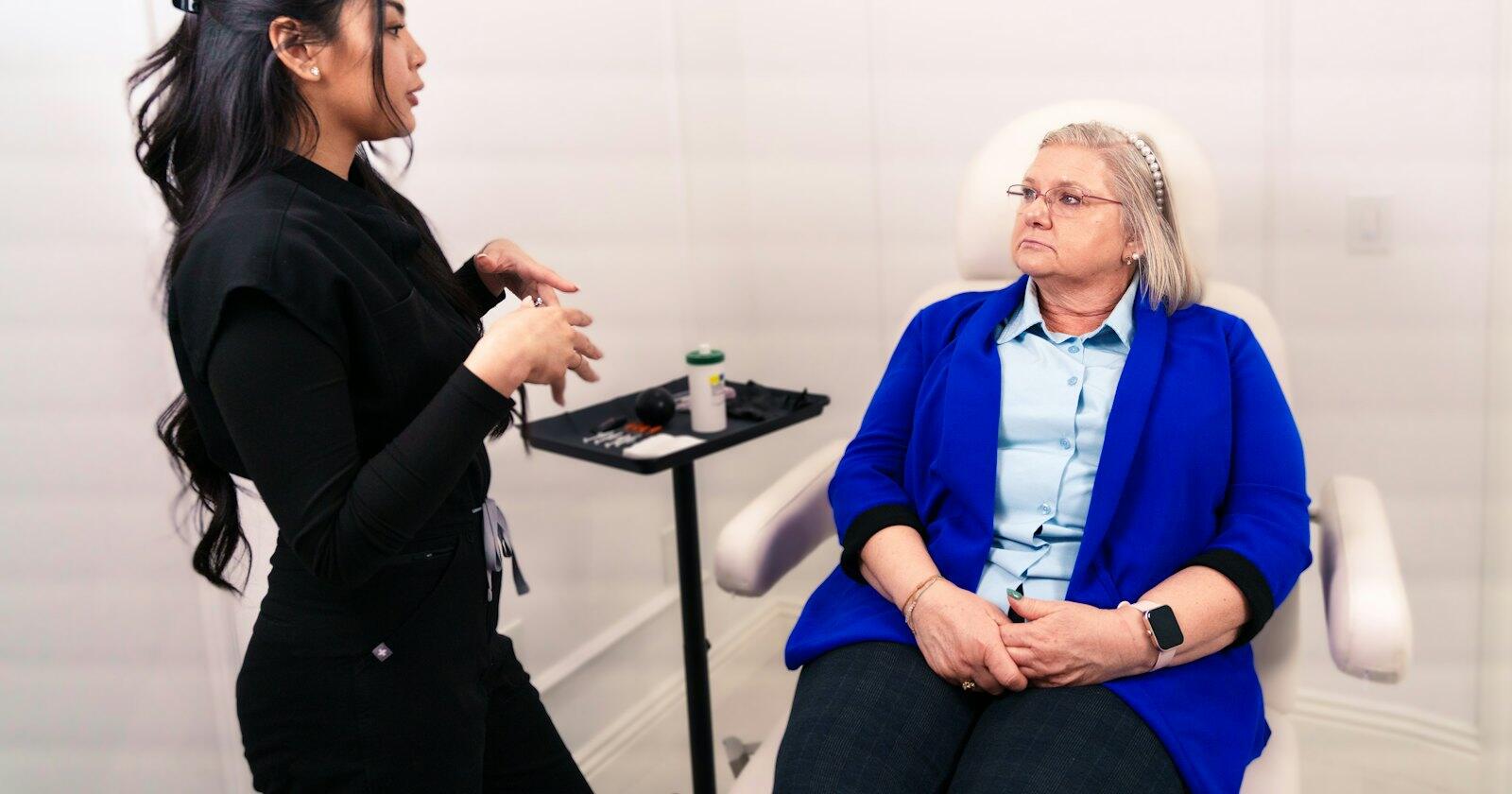
Botox advertising to the public is against the law in the UK, and a promotional text to a client list counts. Regulation 284 of the Human Medicines Regulations 2012 says "a person may not publish an advertisement that is likely to lead to the use of a prescription only medicine", and botulinum toxin is one. The ASA enforces the same ban through rule 12.12 of the CAP Code, which covers direct marketing as well as posters and posts. For an aesthetics clinic that means two kinds of text with two sets of rules: the ones about appointments a client has already booked, and the ones meant to fill the diary. Aesthetics clinic texts in the second group are where the trouble starts.
What the rules say about advertising Botox
The regulations define an advertisement broadly. Regulation 7 says it "includes anything designed to promote the prescription, supply, sale or use of that product". A text sent to past clients to get them booked in for more of a prescription only medicine is designed to do exactly that.
The ASA's guidance is blunt. In traditional media "the ASA considers almost every reference to Botox and other botulinum toxin products as promoting a POM and therefore a clear breach of rule 12.12". The same goes for social media, where "any reference to Botox on their social media pages, including hashtags, is likely to be seen as an implied ad". The rule isn't about the brand name either: it covers "Vistabel, Dysport, Bocouture, and Azzalure", and the ASA's FAQs say it "applies to all 'prescription-only medicines', not just botulinum toxin".
Indirect references count. The ASA advises against "relaxing" for wrinkles because it "is likely to be understood as an implied reference to Botox", and against "anti-wrinkle injections" if a clinic offers only prescription treatments. In December 2024 it upheld a complaint against a company that promoted "cosmetic injections" separately from "dermal fillers" and "lip fillers", with an offer that applied only to anti-wrinkle treatments, because that made the ad an indirect ad for a POM.
The MHRA's guidance for treatment providers shows what's allowed. Clinics "may promote the service they provide", such as "treatments for lines and wrinkles", but material "should not draw attention to specific prescription only medicines". The ASA puts it the same way: "Promote the 'consultation' itself, rather than the product."
Which clinic texts count as advertising
Most of the messages a clinic sends are about something the client has already decided. A confirmation of a booked treatment, a reminder the day before, aftercare instructions and a two-week review the practitioner booked aren't designed to promote anything, and the ICO treats messages to "confirm or remind them about appointments" as service messages. The trouble is in the messages meant to bring people back.
| Text | Advertising a POM? | Marketing under PECR? |
|---|---|---|
| Your appointment is confirmed for Thu 12 Nov at 15:00 | No | No |
| Your aftercare advice is in your email | No | No |
| It's 3 months since your Botox, book your top-up | Yes | Yes |
| 20% off anti-wrinkle treatments this month | Likely, even unnamed | Yes |
| Book a consultation to review your treatment plan | Unlikely, if nothing is named | Yes |
| 20% off lip filler this weekend | No (fillers aren't POMs) | Yes |
Even in a booked-appointment text there's no need to name the product. "Your appointment" does the job, keeps the lock screen discreet, and avoids an argument about whether a text that mentions the brand was promoting it. Our post on health information in a text has more on what a lock screen gives away.
Price offers are the clearest breach. The ASA's FAQs answer the question "Can I advertise a price promotion for Botox (such as '20% off' or 'buy two areas get one free')?" with "No, this is likely to breach the Code", even where the product isn't named, because the offer is still for a prescription only treatment.
Writing a recall text that stays inside the rules
The recall is the text clinics most want to send, and it's the one most likely to cross the line. Written around the consultation, it can work without naming anything:
Brightwell Clinic: it's been 4 months since your last visit. If you'd like a review consultation, reply BOOK and we'll text you some times. Reply STOP to opt out
That promotes a consultation, names no medicine, has no price and gives an opt-out. It's still marketing under PECR, because the ICO says a message that "actively promotes or encourages people to make use of a particular service" is likely to be direct marketing, so it can go only to people who've consented or who qualify for the soft opt-in.
Filler and skin treatment offers are a different matter, as long as they don't imply anything else. The ASA says marketers who offer both may use "cosmetic fillers" or "injected fillers", but must "ensure they don't refer to Botox directly or describe treatments in any way that may imply Botox is being offered". A filler offer can carry a price, but it's still marketing, and the CAP Code's general rules on responsible ads apply. Our post on the CAP Code and promotional texts covers those.
One more thing the ASA flags: using a health professional or a celebrity to endorse a POM breaches rule 12.18. A text that says "Dr Patel recommends..." next to anything that could be read as a prescription treatment is two problems in one message.
Price lists and questions by text
Price lists get their own answer in the ASA's FAQs. A genuine price list that mentions Botox is "potentially OK" provided it "isn't posted on your social media, mailed to prospective customers or placed in any paid-for advertising space". A text sent to a list of prospective clients with prices on it is the texting version of mailing it out, so keep prices for named treatments off marketing texts altogether.
Replies are where staff get caught out. A client who answers a recall text with "how much is it for forehead and frown lines?" is asking a direct question, and the natural thing is to text back a price. The safer reply is the consultation price and an offer to talk the options through, because a consultation is what the rules let you promote, and a two-way inbox keeps the whole exchange on record if anyone asks later.
What happens when a clinic gets it wrong
The MHRA's guidance spells out what follows a breach. "Failure to comply with the Regulations will result in the Advertising Standards and Outreach Unit requesting that the website is amended or withdrawn." Cases "may also be referred to the Inspection, Enforcement and Standards Division for consideration of legal action", and clinics and practitioners "may also be referred to their professional regulators if compliance is not achieved in a timely fashion". The ASA publishes its rulings under the advertiser's name, and its own guidance cites clinics by name and date, which is not the kind of search result a clinic wants.
Consent and the soft opt-in
The marketing texts need consent or the soft opt-in, as for any business. A client who paid for a treatment and was given a clear chance to opt out when they gave their number can get marketing about similar services, with an opt-out in every text. Someone who only asked for a price list hasn't bought anything. Our guide to UK SMS marketing rules sets out both routes, and opt-out handling takes care of the STOP replies. Keep the two kinds of text on separate templates, so a marketing line never slips into an aftercare message. On CaptiFi Connect, campaign sends to a list wait for the end of the quiet hours (21:00 to 09:00 London time by default), so a recall campaign scheduled late in the evening goes out the next morning instead of at bedtime.
Under-18s and the new rules from DHSC
Since 1 October 2021 the Botulinum Toxin and Cosmetic Fillers (Children) Act 2021 has made it an offence to administer to someone under 18 in England "botulinum toxin" or an injection of a filler "for a cosmetic purpose". DHSC's 2026 consultation notes that the Act also made it an offence to make the arrangements. A clinic's booking form should check age before a text confirms anything, and marketing lists shouldn't include anyone under 18.
More rules are coming. On 21 October 2026 DHSC opened a consultation, running to 13 January 2027, on restricting "high-risk cosmetic and wellbeing procedures" to doctors, dentists and independent prescribing nurses, midwives and pharmacists, working for CQC-registered providers. Cosmetic surgery, including the liquid BBL, would be for doctors only, and the procedures would be barred for under-18s outside NHS or medical treatment. DHSC says breaches could bring "unlimited fines, or fixed penalties up to £4,000". The 2023 consultation that led here had over 11,800 responses, and most of those who answered the question on high-risk procedures agreed with restricting them.
11,753 answers to the 2023 consultation in England, published with the government response on 7 August 2025. Respondents chose to take part, so this is not a sample of the public. Percentages as rounded by DHSC.
Source: DHSC, licensing of non-surgical cosmetic procedures consultation, data tables, table 25
See the figures as a table
| Answers (%) | |
|---|---|
| Strongly agree | 53 |
| Agree | 10 |
| Neither agree nor disagree | 4 |
| Disagree | 9 |
| Strongly disagree | 24 |
Licensing for lower-risk treatments is promised to follow, through local authorities, using powers in the Health and Care Act 2022. DHSC says there is "a lack of data on the number of businesses" providing these treatments, and the consultation asks providers to fill the gap.
None of this changes the advertising rules, which already apply in full. If the regulations go ahead, who performs a procedure will matter more, and a booking confirmation that names the practitioner ("with Sarah, our nurse prescriber") is an easy place to do it, as long as it doesn't name the medicine as well.
Common questions
Can an aesthetics clinic text clients about Botox?
A clinic can text clients about appointments they've booked, aftercare and review appointments. It can't send texts that promote Botox or any other prescription only medicine, which includes recall texts and offers that name it or clearly imply it. Promote a consultation instead, without naming the product.
Can I send a Botox discount by text?
No. The ASA's guidance says a price promotion such as 20% off or a multi-area deal for Botox is likely to breach the CAP Code, even if the product isn't named. Discounts on non-prescription treatments such as fillers can be advertised, as long as they don't imply Botox.
Is "anti-wrinkle injections" allowed in a promotional text?
Only in narrow cases. The ASA advises against it where a clinic offers only prescription treatments, because it's likely to be read as an implied ad for one. Where a clinic offers both, it must be clear the term covers both kinds of treatment.
Do I need consent to text aesthetics clients about offers?
Yes. Offers and recall texts are marketing under PECR, so they need the client's consent or the soft opt-in, and every text must give a simple way to opt out, such as replying STOP.
Sources
Read for this post on 4 November 2026.
- legislation.gov.uk: Human Medicines Regulations 2012, regulation 284
- legislation.gov.uk: Human Medicines Regulations 2012, regulation 7 (advertisements)
- MHRA: Blue Guide appendix 6, guidance for providers offering medicinal treatment services
- ASA and CAP: Beauty and cosmetics, botulinum toxin (Botox) products
- ASA and CAP: Botox, frequently asked questions (23 January 2020)
- legislation.gov.uk: Botulinum Toxin and Cosmetic Fillers (Children) Act 2021, section 1
- DHSC: Restrictions on the performance of high-risk cosmetic and wellbeing procedures in England (consultation, 21 October 2026)
- DHSC: Cosmetic cowboys crackdown continues with new restrictions (21 October 2026)
- DHSC: Licensing of non-surgical cosmetic procedures, consultation and response
- DHSC: 2023 consultation responses, data tables (ODS)
- ICO: direct marketing guidance, identifying direct marketing
Written by the CaptiFi Connect team. Published 4 November 2026. More in Rules and trust
Send your first text this week
Set up your account and contacts now. Until we've approved it, a person reads each text before it goes out.