
Sectors8 min read
Campsite and caravan park texts from booking to departure
Campsite and caravan park texts from booking to departure: arrival times, pitch details, weather and flood warnings, and the rules on offers for next season.
In short
- By our own sum of the GB Tourism Survey data, British residents took about 6.6 million overnight trips in England with a caravan, campsite or glamping stay as the main accommodation in 2025.
- The GB Tourism Survey put all domestic overnight trips in England at 87.0 million in 2025, 3% down on 89.6 million in 2024.
- Environment Agency guidance says owners and managers of campsites, caravan sites and holiday parks are responsible for keeping people on their site safe from flooding.
- The Environment Agency's campsite guidance says a flood plan should make someone responsible for communicating to everybody on the site, and owners can ask people to move touring caravans and tents if it is safe.
- The Met Office issues weather warnings up to seven days ahead for rain, wind, snow, ice, thunderstorms, lightning, extreme heat and fog.
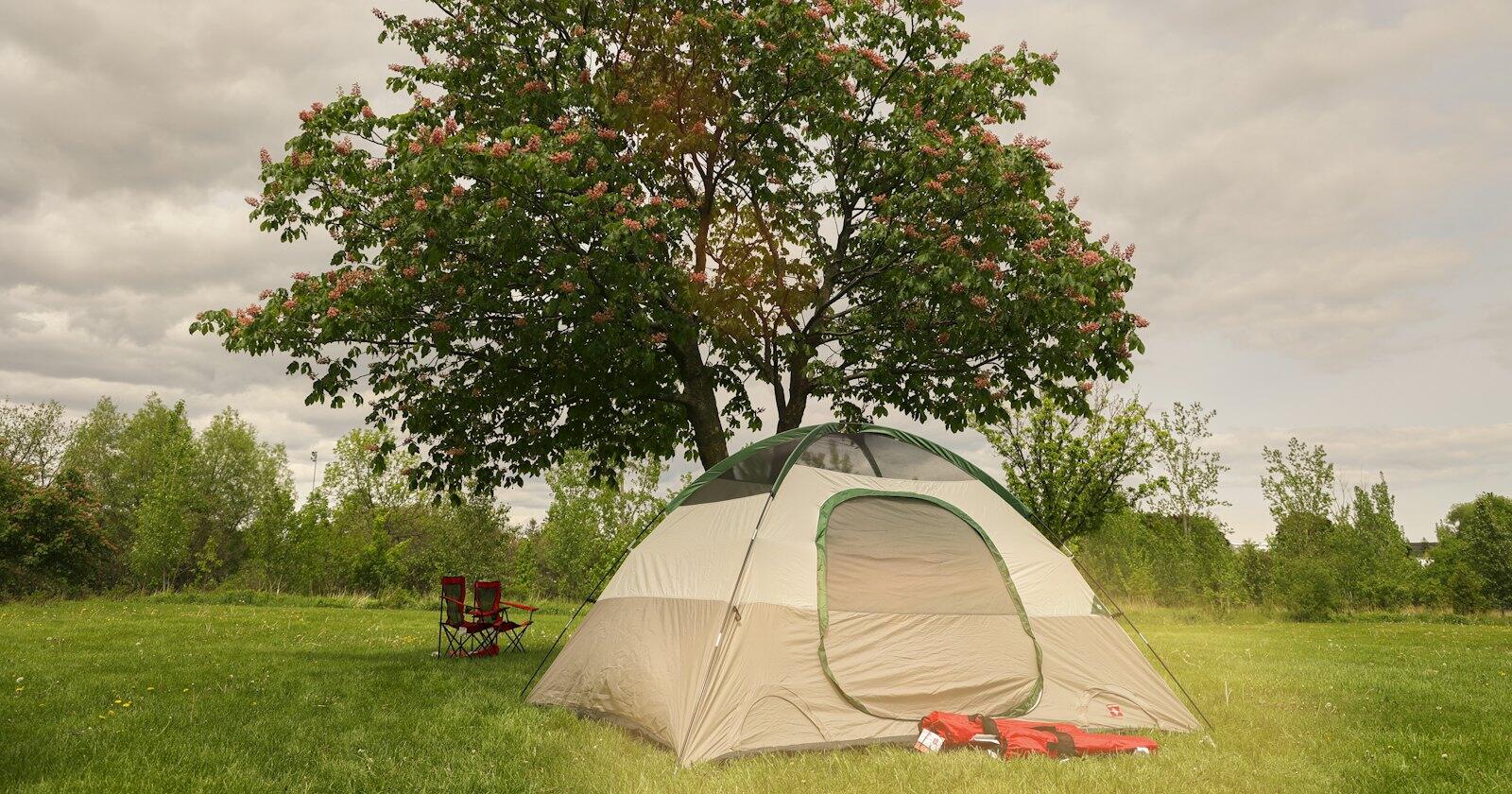
A campsite's busiest hour is usually the one between four and six on a Friday, when half the weekend's bookings turn up at once, two of them can't find the entrance, and someone with a twin-axle caravan has just met a tractor in the lane. Campsite and caravan park texts are mostly about getting people onto the right pitch with the least fuss, and then, once in a while, about getting them off it in a hurry. The second job is the one that's easy to leave until it's needed.
Camping and caravan trips in England
VisitBritain publishes the GB Tourism Survey, the official count of overnight trips that people living in Britain take at home. Its 2025 results, released in June 2026, put domestic overnight trips in England at 87.0 million, 3% down on 89.6 million in 2024. The published report doesn't split those trips by where people stayed, but the pivot tables behind it do, and by our own sums about 6.6 million of the 2025 trips (7.6%) had a caravan, campsite or glamping stay as the main accommodation. Those trips added up to roughly 24 million nights and about £1.8 billion of spending.
Our own sums of the trip data, by reporting month, for trips by British residents with England as a destination and a caravan, camping or glamping stay at the main place visited. Survey estimates, and single months move about more than the year does. VisitBritain notes October to December 2025 results are not directly comparable with earlier quarters.
Source: VisitBritain, GBTS domestic overnight trips 2022 to 2025, pivot tables
See the figures as a table
| Trips (millions) (m) | |
|---|---|
| Jan | 0.22 |
| Feb | 0.21 |
| Mar | 0.39 |
| Apr | 0.46 |
| May | 0.69 |
| Jun | 0.57 |
| Jul | 0.83 |
| Aug | 0.98 |
| Sep | 1.04 |
| Oct | 0.59 |
| Nov | 0.3 |
| Dec | 0.32 |
The season is longer than people think. July, August and September each saw more than 800,000 caravan and camping trips, with September the highest of the year at just over a million. May was busy too, at about 690,000. Even January and February had more than 200,000 trips each.
The same tables show the share falling. By our sums, caravan, camping and glamping stays were 9.4% of England's overnight trips in 2024 (8.4 million) and 7.6% in 2025. Survey estimates move about from year to year, and VisitBritain warns that its results for October to December 2025 aren't directly comparable with earlier quarters, so treat the exact fall with some caution. Still, a site that's busy in August and quiet in March has a lot riding on getting each booking right.
The texts from booking to pitch
Here's a set for a fictional site, Ashcombe Farm Camping, with pitch numbers filled in from the booking.
A few days before arrival:
Ashcombe Farm: see you Fri 10 Sep. Arrivals 2pm to 8pm, you're on pitch 14 (hardstanding, hook-up). Satnav brings you to the farm, not the lane. Reply with your arrival time.
The arrival day, with the bit that goes wrong:
Ashcombe Farm: the site entrance is the 2nd gate after the farmhouse, signed in green. Barrier code 2580. If you're arriving after 8pm, reply and we'll leave your pack at the gate.
Departure morning:
Ashcombe Farm: hope you've had a good stay. Pitches need to be clear by 11am. Please drop the barrier fob in the box by the gate. Safe trip home.
These are small things, but they're the ones that bring a site manager out of the shop at the worst moment. The pitch number in the first text means the guest can find it without queuing at reception. The arrival-time question lets you see the evening coming. And the departure text saves knocking on doors at ten past eleven.
Three of these run past 160 characters, so they go as two parts and cost two credits each. That's worth it for the arrival text, which carries the code and the directions in one place, but it's a good habit to read each template once with a character counter before the season starts. Our SMS character counter shows the part count as you type.
Pitch numbers and arrival dates can come from the booking system as contact fields. CaptiFi Connect fills in merge fields from each contact, including any custom field by its key, so one text to the list of Friday's arrivals can carry each guest's own pitch number. Import the arrivals as a CSV with column mapping (numbers already in your contacts are updated in place), and schedule the pre-arrival text for a few days ahead. Ask for replies only from a number, since texts from a sender name can't be answered; the replies come into the two-way inbox and cost nothing to receive.
Weather and flood warnings
Tents and touring caravans sit closer to the weather than any other kind of holiday, and the Met Office warnings are the usual trigger for a text. It issues them "up to seven days ahead" for rain, wind, snow, ice, thunderstorms, lightning, extreme heat and fog. Under an amber warning its advice is "You should think about changing your plans", and under red, "You should avoid travelling, where possible". A text to the week's arrivals when an amber wind warning goes up gives people a chance to bring extra pegs, come a day later or decide not to come at all, which is better for everyone than finding out at the gate.
Flooding is a heavier responsibility. The Environment Agency's guidance for England is direct about it: "You are responsible for keeping people on your site safe from flooding if you own or manage" a campsite, caravan site, holiday park or residential park. It tells owners to sign up for flood warnings "by phone, text or email", to write a flood plan with a site map, and to make a person or group responsible for, among other things, "communicating to everybody on your site". It also says "If it is safe, you can ask owners to move touring caravans and tents off site before or during a flood."
A text is the quickest way to reach everybody on site at once, especially people out for the day who've left the tent behind. Keep a list of who's on site tonight (arrivals added, departures removed), and have the wording ready in the flood plan so nobody is composing it at two in the morning:
Ashcombe Farm: flood warning for the river field. Please move tents and caravans on pitches 30 to 45 to the top field now. Staff are at the gate to help. Reply if you need a hand.
One setting matters here. CaptiFi Connect holds sends to a whole list during the account's quiet hours, 21:00 to 09:00 London time by default, which is sensible for marketing and wrong for a flood. The send screen offers a "Send now anyway" box when a list send falls in quiet hours, so make that tick part of the written plan. Texts typed in to individual numbers aren't held. And check the delivery reports after the send: a text that failed means a caravan someone needs to walk to.
None of this replaces the flood warning signs and site map the guidance describes. A text can't reach a guest whose phone is flat or in a car, and the Environment Agency also expects owners to plan for people who need more help, including disabled and older guests and children.
Seasonal pitches and holiday homes
Not everyone on a caravan park is passing through. Seasonal tourers leave their caravan on the same pitch from spring to autumn, and holiday home owners may be on site most weekends. They need a different kind of text: the date the site opens and closes, when the water goes off for the winter, when the pitch fees are due, and what's happening with the work on the shower block.
Ashcombe Farm: a reminder that the site closes for winter on Sun 31 Oct. Water will be drained on Mon 1 Nov, so please empty your tanks before you leave. Thanks, Helen
Keep these owners on their own list, separate from the weekend arrivals, so a "pitches must be clear by 11am" text never reaches someone whose caravan lives there. The same list is the one to use when a storm is forecast in the closed season, because a static caravan left on site is still the owner's worry, and the Environment Agency's guidance suggests tying caravans together during the closed season where flooding is a risk.
Offers and next season
Everything above is a service message. The ICO describes service messages as those that "aren't promotional but are for administrative or customer services purposes", and arrival details, codes and weather warnings plainly fit. The ICO also says that if a service message "has elements that are direct marketing, even if that is not the main purpose of your message, then it will count as direct marketing". So the departure text shouldn't double as an advert for next year's early-bird rate.
Early-bird offers can go separately, as marketing. For guests who booked direct, the soft opt-in usually applies: the ICO says you can text marketing to "an existing customer who bought (or negotiated to buy) a similar product or service from you in the past", provided they were given "a simple way to opt out both when you first collected their details and in every message you have sent". Add a line to the booking form and "Reply STOP to opt out" to every offer, and the January text about Easter pitches is fine. Guests who booked through a third-party site are better asked directly.
Sites in Wales have one more thing to plan for. Every visitor accommodation provider there has to register with the Welsh Revenue Authority by 31 March 2027, and where a council charges the visitor levy, tent pitches pay a lower rate than caravans. Our post on holiday let check-in texts covers the levy and why a guest count by text helps.
Common questions
What should a campsite arrival text include?
The arrival window, the pitch number and type, directions that work where the postcode doesn't, and any gate or barrier code. Ask for an arrival time so you can plan the evening. Send it a few days before, with a short reminder on the day.
Can a campsite text guests about a flood warning at night?
Yes, and the Environment Agency expects site owners to have a way of communicating with everybody on site during a flood. Have the wording ready in your flood plan, keep a list of who is on site, and make sure your texting service won't hold a night-time send.
Can I text past campers about next season's offers?
If they booked direct and were offered an opt-out when you took their number, the ICO's soft opt-in usually covers texts about similar stays. Every offer needs an opt-out line. Guests who booked through another website should be asked first.
How do I add pitch numbers to campsite texts?
Import each booking with the pitch number as a contact field, then use it as a merge field in the text. Each guest then gets their own pitch number in the same send.
Sources
Read for this post on 4 November 2026.
- VisitBritain: Domestic tourism, latest results (GB Tourism Survey, released 11 June 2026)
- VisitBritain: GBTS, domestic overnight and day trips in Q4 2025 and in 2025, toplines
- VisitBritain: GBTS, domestic overnight trips 2022 to 2025, pivot tables
- Environment Agency: Managing flood risk for campsite and caravan park owners
- GOV.UK: Sign up for flood warnings
- Met Office: weather warnings guide
- ICO: direct marketing guidance, identifying direct marketing
- ICO: Guide to PECR, electronic mail marketing
Written by the CaptiFi Connect team. Published 4 November 2026. More in Sectors
Send your first text this week
Set up your account and contacts now. Until we've approved it, a person reads each text before it goes out.