
Sectors8 min read
Care home updates for families by text
CQC lists 14,899 care homes in England with 488,407 beds. How a care home texts families about visiting, who may receive updates and what stays out of them.
In short
- CQC's care directory listed 14,899 active care home locations in England with 488,407 registered beds on 2 November 2026, of which 4,517 homes were registered for care with nursing.
- Regulation 9A, in force in England since 6 April 2024, says care home residents must be helped to receive visits and must not be discouraged from visits out, unless there are exceptional circumstances.
- CQC's guidance on regulation 9A says information about visiting restrictions should be communicated clearly to residents and to those restricted from visiting throughout the process.
- NHS England's information governance guidance says health and care messages should generally go only to the person they relate to, with a note on the record when someone else may receive them.
- Where an adult in social care lacks capacity, NHS England says consent to share should be sought from a health and welfare lasting power of attorney or a welfare deputy where one exists.
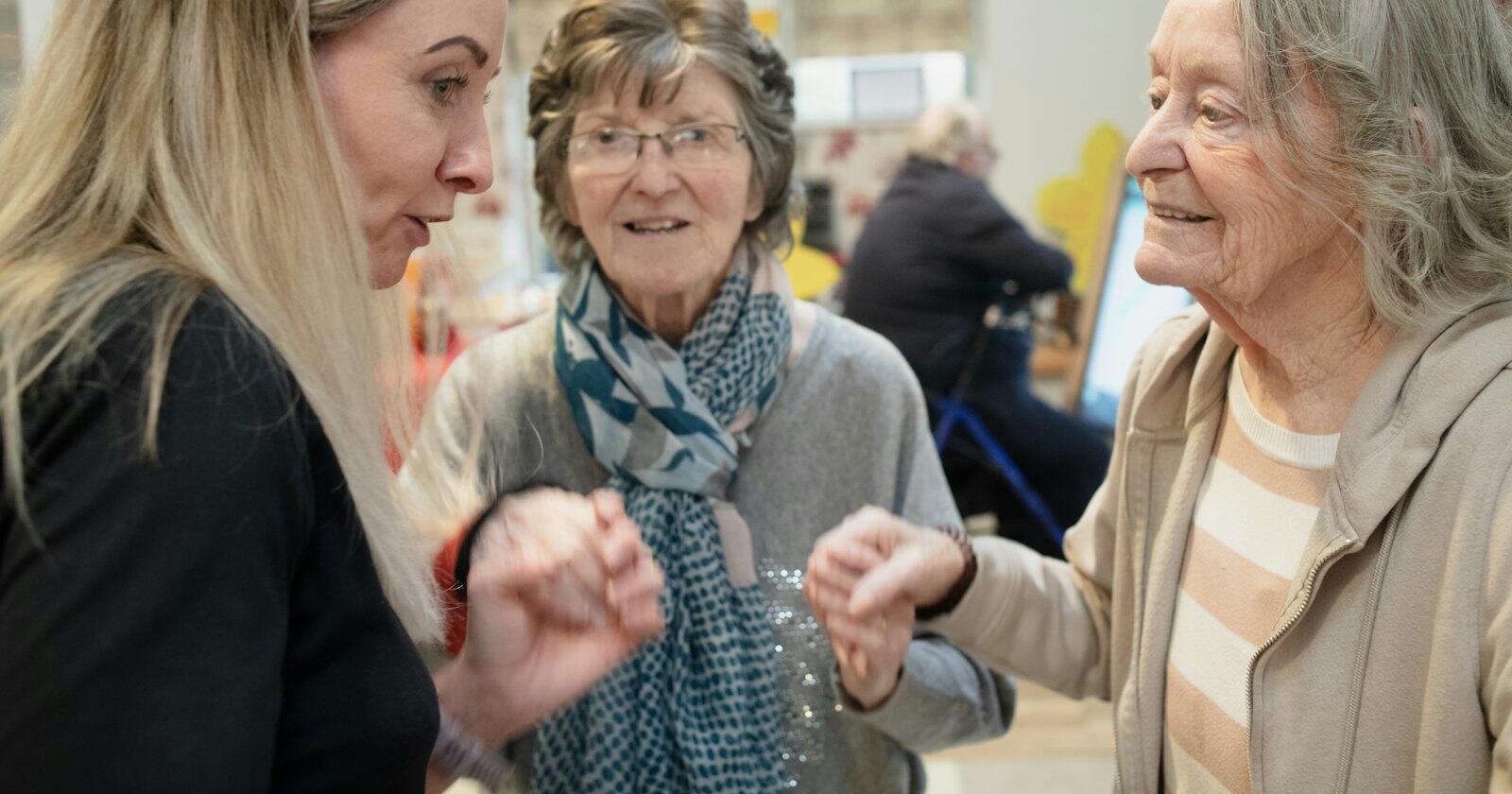
CQC's care directory for 2 November 2026 lists 14,899 active care homes in England with 488,407 registered beds between them. Behind most of those beds is a family that wants to know whether visiting is on this weekend, or why Mum's phone keeps going to voicemail. Texting care home updates to families answers a good share of those questions before anyone picks up the office phone. It also raises two that need answering first: who is entitled to hear about a resident, and how much a text should say.
How many care homes there are, and how big
We counted the locations CQC flags as care homes in its "care directory with filters" file, which carries bed numbers and the services each home is registered for. Of the 14,899, 4,517 are registered as care homes with nursing, with 242,440 beds, and 10,382 as care homes without nursing, with 245,967 beds. 11,538 are registered to support older people and 8,459 people living with dementia (a home can be registered for several groups). The South East has the most, 2,817, and the North East the fewest, 740.
Our count of locations flagged as care homes in the CQC file as at 2 November 2026, grouped by the "care homes beds" column (one home has no bed figure). Includes 116 locations marked dormant. CQC says some updates are taking longer than usual while it moves systems.
Source: CQC, care directory with filters (HSCA active locations), 2 November 2026
See the figures as a table
| Care homes | |
|---|---|
| 1 to 10 | 4,199 |
| 11 to 20 | 1,848 |
| 21 to 30 | 2,064 |
| 31 to 40 | 1,876 |
| 41 to 50 | 1,385 |
| 51 to 60 | 1,131 |
| 61 to 80 | 1,725 |
| 81 to 100 | 446 |
| Over 100 | 222 |
The spread of sizes is wide. 4,199 homes have ten beds or fewer, the biggest single group in the chart, and 3,647 of those small homes are registered to support people with a learning disability or autism. At the other end, 222 homes have more than 100 beds. A ten-bed home can ring every family when something changes. A 90-bed home with three units and two shifts can't, and that's where a text to a list starts to earn its keep.
CQC adds a caveat to its files: it's moving to a new system, and some updates "are taking longer than normal to appear", such as cancelled registrations, so the totals may be a little out.
What regulation 9A says about visiting
Visiting has had its own fundamental standard since 6 April 2024, when regulation 9A was added to the Health and Social Care Act 2008 (Regulated Activities) Regulations 2014. For care homes it says that, "unless there are exceptional circumstances", residents "must be facilitated to receive visits" and "must not be discouraged from taking visits out of that care home". The visits have to happen in a way that meets the resident's needs and, "so far as reasonably practicable, reflects their preferences".
CQC's guidance on the regulation, last updated on 16 May 2025, is where texts come in. It expects homes to assume visiting is possible and to use precautions before restrictions, such as visitors wearing masks if there's a significant risk of infection. When a restriction is needed, "it is important that information is communicated clearly to the person using the service and those restricted from visiting throughout the process", and the provider "should also be clear with those involved who they can contact within the service if they have questions or concerns". It also says video and phone calls can keep contact going while visits are paused, but "should not be used as alternatives to in-person visiting, where the person wants in-person visits".
The guidance also says providers "should always support visits in person to someone who is receiving care at the end of their life", whatever else is going on. An outbreak notice that restricts visiting should say so in plain words, so the family of someone who is dying doesn't read the text and stay away.
So an outbreak on one unit produces three texts: the precaution or restriction and who it covers, a name and number to ask about it, and the all-clear. A home has to keep a record of its assessment and decisions on visiting anyway, and a delivery report for each text shows who was told and when.
Who gets the texts
Settle this before anything is sent. Care homes often keep a "next of kin" field, but the people entitled to hear about a resident are set by consent and capacity, and NHS England's guidance is clear about the default. Health and care messages should "generally only" go "to people who the services directly relate to". The exceptions are a proxy with parental responsibility, a proxy acting under a best interests decision where the person lacks capacity, and a proxy the person has given explicit consent for, and in each case "there should be notes written in the individual's health and care record confirming that other people can receive messages on their behalf".
NHS England's guidance on information sharing in social care fills in the rest. Sharing within the care team can rely on implied consent, but family members aren't part of the care team. Where a resident lacks capacity, consent should be sought from "the person who holds a health and welfare lasting power of attorney (LPA)", or from a welfare deputy appointed by the Court of Protection. If there's neither, a senior person in the home decides case by case what's in the resident's best interests. And because "capacity can fluctuate", the decision has to be reviewed regularly and recorded in the resident's care record and support plan.
In practice that means each resident has a short list of contacts, and each contact has three things recorded against them: what they've agreed to receive, why they're allowed to receive it (the resident's consent, an LPA, a best interests decision) and when that was last checked. A daughter with a health and welfare LPA may get individual updates. A nephew who visits on Sundays may get the home-wide visiting notices and nothing about his aunt's health. Both can sit on the same contact list in different groups.
Two kinds of family text
Notices to every family are the easy ones. Visiting times over Christmas, a unit with precautions in place, the car park being resurfaced, the main phone line being down. They say nothing about any resident, so they can go to everyone on the relatives list.
Larkfield House: visiting on Rowan unit is open but we're asking visitors to wear a mask until Fri 13 Nov. Masks are at reception. Questions to Claire Hughes on 07700 900412.
Larkfield House: our main phone line is down this morning. For anything urgent please call 07700 900412. We'll text when it's fixed.
Updates about one resident are harder. NHS England warns that texts can be read on "devices' locked screens", and an older relative's phone may be shared with a partner or a grandchild who borrows it. A fall, a GP visit or a hospital transfer deserves a phone call, and the text's job is to make sure the call gets returned:
Larkfield House: please could you call Claire on 07700 900412 about your mum when you get a moment. Nothing urgent.
Write "nothing urgent" only when it's true. If it is urgent, ring first and send the text as a backup. Our post on health information in a text has more on what a lock screen gives away, and writing texts for older customers covers the readers on the other end.
Events, fundraising and the marketing line
The summer fair, the carol service and the "friends of Larkfield" raffle are friendly texts that families mostly want. Some will count as marketing. The ICO's guidance says a message that "actively promotes or encourages people to make use of a particular service, special offer, or upgrade" is likely to be direct marketing, and a text about respite places or a new day centre clearly is. Invitations and fundraising sit closer to the line; our post on service and marketing texts works through cases like them. The simple approach is to keep a separate events list that families join by choice, with "Reply STOP to opt out" on each message, and to keep visiting and safety notices on the list everyone is on.
Setting it up
The contacts usually live in the home's care management system already. Export them to CSV with a group column (unit, plus "individual updates" for the contacts allowed them) and import them; a later import updates existing contacts in place, which matters when the export is redone every month. A bulk SMS send to the Rowan unit list covers an outbreak notice. Replies come into a shared two-way inbox, so a question about visiting reaches whoever is on shift, and it's free to receive them. Christmas visiting times can be written in November and scheduled for the first week of December.
A home with its own dedicated number can go a step further and set up a keyword. A relative who texts VISIT gets an automatic reply with this week's visiting times and the number to ring, which is handy for the questions that come in at the weekend when the office is shut. Keep the reply general (times, the unit's phone number, parking) because a keyword answers anyone who sends the word, whether they're on your list or not. Anything that needs a person, such as booking a quiet room for a birthday, still lands in the inbox for staff to pick up.
Campaign quiet hours on CaptiFi Connect hold list sends between 21:00 and 09:00 London time by default, which keeps a routine notice off an older relative's phone at 11pm. Through the API, a send can override that for something that really can't wait.
Common questions
Can a care home text families without consent?
Home-wide notices such as visiting times can go to relatives who've given the home their number for that purpose. Anything about an individual resident's care should go only to people the resident has agreed can receive it, or to someone with legal authority such as a health and welfare LPA, or under a recorded best interests decision. Note who can receive what in the resident's record.
Does next of kin have the right to updates about a care home resident?
NHS England's guidance doesn't use next of kin as the test. It looks at the resident's explicit consent, a health and welfare lasting power of attorney or a welfare deputy, and best interests decisions where the resident lacks capacity. A next of kin field is useful for contact, but on its own it doesn't settle what they can be told.
What does regulation 9A mean for care home visiting?
Since 6 April 2024, care homes in England must help residents receive visits and must not discourage visits out unless there are exceptional circumstances. CQC expects precautions before restrictions, clear communication about any restriction, and a named contact for questions.
Should a care home text families about a fall?
A fall is better handled by phone, because a text can be read by anyone holding the relative's phone. A short text asking them to call a named member of staff makes sure the call happens without putting the detail on a lock screen.
Sources
Read for this post on 4 November 2026.
- CQC: Using CQC data (care directory files)
- CQC: Care directory with filters, HSCA active locations, 2 November 2026 (ODS)
- legislation.gov.uk: Health and Social Care Act 2008 (Regulated Activities) Regulations 2014, regulation 9A
- CQC: Regulation 9A, visiting and accompanying in care homes, hospitals and hospices
- NHS England: Texting, emailing and messaging patients and service users, guidance for health and care professionals
- NHS England: Information sharing in social care
- NHS England: Sharing information with unpaid carers
- ICO: direct marketing guidance, identifying direct marketing
Written by the CaptiFi Connect team. Published 4 November 2026. More in Sectors
Send your first text this week
Set up your account and contacts now. Until we've approved it, a person reads each text before it goes out.