
Sectors8 min read
Event day texts for ticket holders
Event day texts that get ticket holders in on time: gate times, bags, transport, weather and lost property, with DCMS attendance figures and the rules.
In short
- DCMS's Participation Survey found that 40% of adults in England went to a play, musical, pantomime, ballet or opera in the year to March 2025, and 39% went to a live music event.
- In the same DCMS survey, 30% of adults in England had watched live sport in person in the previous 12 months, and 65% of those had been to football.
- The Met Office issues weather warnings up to seven days ahead, and under an amber warning it advises people to think about changing their plans.
- Regulation 28 of the Consumer Contracts Regulations 2013 excludes services related to leisure activities with a specific date from the 14-day cancellation right.
- The ICO says a service message with elements of direct marketing counts as marketing even when that is not its main purpose, so event-day texts should leave out offers.
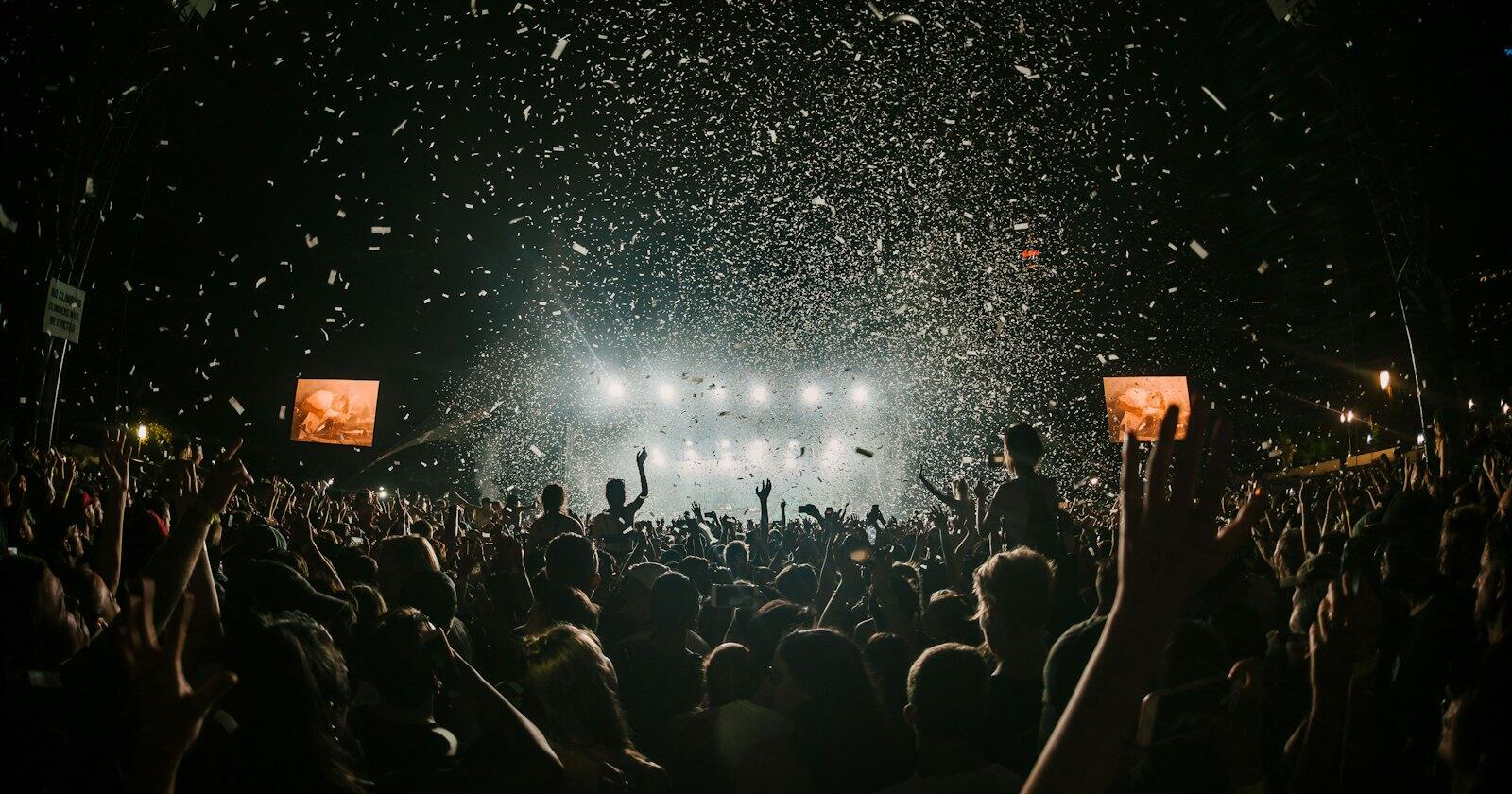
Most of what goes wrong at the gate of a concert or a match was decided hours earlier, in a car park, at a station, or in a kitchen where someone was choosing which bag to bring. Event day texts reach ticket holders at those moments. A short message the day before (gate times, the bag rule, the last train) and another on the day (which entrance has the shortest queue) do more for a smooth entry than any sign at the turnstile, and they're cheap to send to a few thousand people at once.
How many people go to live events
The Department for Culture, Media and Sport runs the Participation Survey, which asks adults in England what they've been to in the past year. The latest annual results cover April 2024 to March 2025. Among arts events, 40% of adults had been to a play, musical, pantomime, ballet or opera, and 39% to a live music event. An arts festival or carnival drew 22%, a comedy event 16% (up on the year before) and a live dance event 6%. Cinema, which most people don't think of as an event, led the table at 54%.
Adults aged 16 and over in England, April 2024 to March 2025, any attendance in the previous 12 months. Cinema (54%) and street art (6%) are left out. Live sport is measured separately: 30% had watched it in person.
Source: DCMS, Participation Survey 2024 to 2025 annual data tables, table A1
See the figures as a table
| % of adults (%) | |
|---|---|
| Theatre, musical, opera, ballet | 40 |
| Live music | 39 |
| Art or photo exhibition | 26 |
| Arts festival or carnival | 22 |
| Comedy | 16 |
| Craft exhibition | 11 |
| Literature or book event | 9 |
| Live dance | 6 |
Live sport is counted separately. Thirty per cent of adults had watched a live sporting event in person in the previous 12 months. Of those, 65% had been to football, 19% to rugby, 18% to cricket and 11% to horse racing. A lot of them were regulars: 39% had been to between two and four events in the year, and 15% to fifteen or more. The survey also found that men (40%) were more likely than women (22%) to have attended live sport, and adults aged 75 and over were among the least likely.
Taken together, that's a lot of people who go to a few events a year and don't know the venue well. They don't know which gate is nearest the car park or that the bag policy changed last season. Regulars who go fifteen times a year know all of that and still need to hear when kick-off moves for television.
The texts in the last few days
Here's a set for a fictional outdoor concert, Moorside Live, on a Saturday in June. They go to the number the buyer gave when booking.
Three days before, with the things people need to plan:
Moorside Live: 2 tickets for Sat 12 Jun are in your email. Gates 4pm, last entry 8pm. Small bags only, no glass. Shuttle buses from Hexley station 3pm to 6pm.
The morning of the event, with the one thing that changes on the day:
Moorside Live: gates open at 4pm. The North gate on Mill Lane usually has the shortest queue. Have your ticket open on your phone with the screen bright.
Near the end of the night, for the people who came by shuttle or train:
Moorside Live: last shuttle bus to Hexley station leaves the main gate at 11:15pm. The last train from Hexley is 11:52pm. Please walk, don't run, on Mill Lane.
After the show, which saves the box office phone a busy Monday:
Moorside Live: thanks for coming. Lost property is at the box office until Friday, 10am to 4pm. Reply with what you lost and we'll check.
The first two can go from a registered sender name, MOORSIDE for instance, which people recognise straight away on the lock screen. The last one asks for replies, so it has to go from a number, because a sender name can't be answered. Keep the order the same each time (who you are, when, what to do) and put the date in words people use, "Sat 12 Jun" and not "12/06". Our post on dates, times and prices in a text goes into that.
Leave out what people already have. A ticket holder doesn't need the line-up by text (they've got it), nor the merchandise prices. And anything promotional changes what the text is. The ICO's guidance says that if a service message "has elements that are direct marketing, even if that is not the main purpose of your message, then it will count as direct marketing". "Gates at 4pm, and 20% off at the bar before 6" is a marketing text, with all the consent rules that brings.
When plans change
Outdoor events live with the weather. The Met Office issues warnings "up to seven days ahead" for rain, wind, snow, ice, thunderstorms, lightning, extreme heat and fog, coloured yellow, amber or red by a mix of impact and likelihood. Under an amber warning its advice is "You should think about changing your plans", and under red, "You should avoid travelling, where possible". A ticket holder who has seen an amber warning on the news is already wondering, and a text from the organiser is the quickest way to answer before the box office phone does.
Moorside Live: amber wind warning for Sat. The concert is on, but the big top will be closed. Bring a waterproof. Any changes and we'll text you here first.
Delays deserve a text too, sent before the queue starts asking:
Moorside Live: gates are opening 30 minutes late, at 4:30pm, while we finish safety checks. Sorry for the wait. Water is available at the North gate.
If the event is postponed or cancelled, the text needs to say what happens to tickets, and it helps to know the starting point. Regulation 28 of the Consumer Contracts Regulations 2013 takes "services related to leisure activities, if the contract provides for a specific date or period of performance" out of the 14-day right to cancel that applies to most things bought online. So a ticket holder can't simply change their mind, and what they're owed when the organiser changes the date depends on the ticket terms and the wider consumer law. Say plainly what you're offering, where to claim it and by when, and send people to a web page for the detail.
Emergencies on the night are a different matter. A text is no substitute for the procedures a venue needs for evacuation, invacuation or lockdown, and the rules for those are tightening under Martyn's Law. Our post on Martyn's Law and alerting people at your venue covers where a text fits, and the one on why emergency alerts are not texts explains how the government's own alerts work.
Whose number is it?
A lot of tickets are sold by a ticket agent, not by the venue or promoter, and the buyer's details sit with whoever sold the ticket. Before you text anyone, be clear who collected the number, what the buyer was told it would be used for, and whether the agent's terms let you have it. A list exported from a ticketing platform with no idea how it was gathered is a risk, however tempting before a big night.
Texts about the event someone has booked for are service messages. Texts about the next event are marketing. For buyers who bought from you directly, the ICO's soft opt-in can cover texts about similar events, as long as they were given "a simple way to opt out both when you first collected their details and in every message you have sent". That means a line at checkout and "Reply STOP to opt out" on every promotional text. Our guide to the UK rules for marketing texts has the rest.
Getting a few thousand texts out on time
Event texts are bunched: one send to everybody at roughly the same moment. CaptiFi Connect takes up to 1,000 numbers in one API request, or a whole contact list, and each key can make 20 requests a second. The post on how fast you can send 10,000 texts goes through what that means in practice, and the limits the networks put on repeated texts to one number.
For most organisers the simplest route is a CSV export from the ticketing system. Import it with the column mapping (numbers already in your contacts are updated in place), put each event's buyers on their own list, and schedule the pre-event and on-the-day texts as soon as the list is in. The credits are taken when you schedule, and if the event moves you cancel the scheduled send and get them back.
Two settings are worth checking. Sends to a whole list keep to your account's quiet hours, 21:00 to 09:00 London time by default, which suits marketing and catches out event organisers. The 22:00 last-shuttle text to the list would wait until nine the next morning, as would a 07:30 "car park open early" text. Tick "Send now anyway" on the send screen, or change the quiet hours in Settings for the weekend of the event and change them back afterwards. Texts typed in to individual numbers aren't held. And every text gets a delivery report: if a few hundred show as failed, the numbers in that export probably need a look before the next event.
Common questions
What should an event day text say?
The event name, the date and gate or door times, the one or two rules people break most often (bags, glass, ID), and how to get there or park. Send it the day before or the morning of the event. Leave offers out, or it becomes a marketing text.
Can I text ticket holders without their consent?
You can send texts about the event they've booked, because those are service messages. Texts promoting other events are marketing and need consent or the soft opt-in, with an opt-out in every message. Check that the number was collected for that purpose, especially if a ticket agent sold the ticket.
When should a festival or concert send its reminder texts?
A few days before for anything people need to plan (travel, bags, timings), and the morning of the event for gate times and queues. If the Met Office issues a warning, send an update as soon as you've decided what it means for the event.
Can ticket holders reply to event texts?
Only if the text comes from a number. Texts sent under a sender name such as the event's name can't be answered, so use a number for anything that asks a question, such as the lost property text after the show.
Sources
Read for this post on 4 November 2026.
- DCMS: Participation Survey 2024 to 2025 annual publication
- DCMS: Participation Survey, main report, April 2024 to March 2025
- DCMS: Participation Survey annual data tables, July 2025 (tables A1 and F1)
- Met Office: weather warnings guide
- legislation.gov.uk: Consumer Contracts (Information, Cancellation and Additional Charges) Regulations 2013, regulation 28
- ICO: direct marketing guidance, identifying direct marketing
- ICO: Guide to PECR, electronic mail marketing
Written by the CaptiFi Connect team. Published 4 November 2026. More in Sectors
Send your first text this week
Set up your account and contacts now. Until we've approved it, a person reads each text before it goes out.