
Sectors9 min read
Boiler service reminder texts for heating engineers
HSE advises a gas boiler service at least once a year, and 22.7 million homes in England have a boiler. How heating engineers set up service reminder texts.
In short
- The English Housing Survey found a boiler in about 22.7 million of England's 25.6 million homes in 2024, and 62.7% of all homes had a condensing combination boiler.
- HSE strongly advises that gas appliances, flues and pipework are serviced at least annually by a Gas Safe registered engineer, and says around 7 people a year die from gas-related carbon monoxide poisoning.
- Regulation 36 of the Gas Safety (Installation and Use) Regulations 1998 requires a landlord to have each gas appliance and flue it provides checked at intervals of not more than 12 months.
- Under regulation 36A, added in 2018, a landlord's gas safety check done in the 2 months before its deadline date counts as done on the deadline, so the yearly date does not creep earlier.
- Under the ICO's direct marketing guidance, a service reminder that encourages a booking is likely to be marketing, so it relies on the soft opt-in and an opt-out in every text.
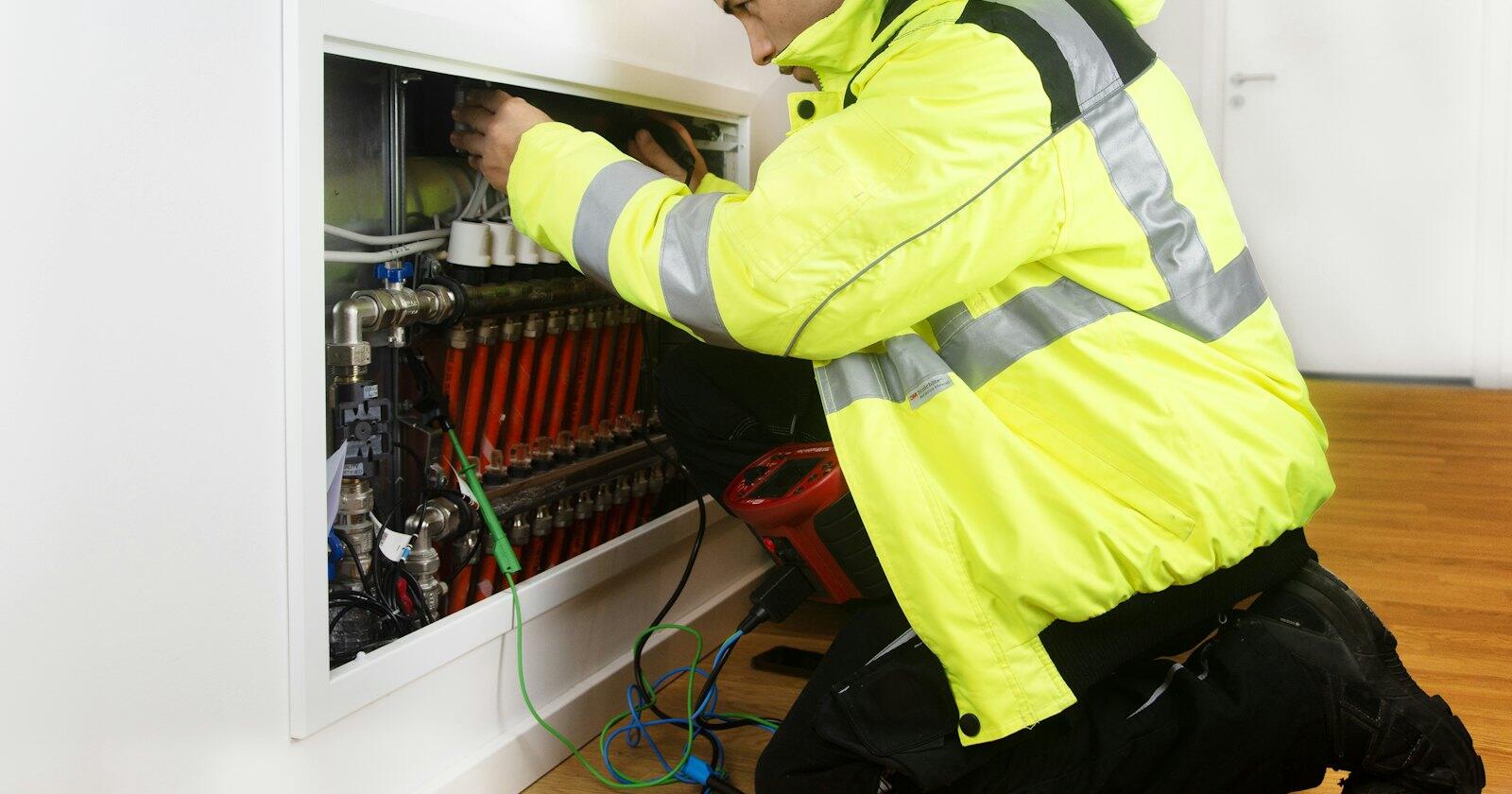
A boiler service is the job nobody books until the heating goes off. Boiler service reminder texts are how a heating engineer gets ahead of that: one message a year, timed from the last visit, that turns last October's customer into this October's booking without anyone ringing round. The English Housing Survey puts a boiler in about 22.7 million of England's 25.6 million homes, so the work is there for whichever firm the customer thinks of first. What HSE advises and what the law makes compulsory aren't the same thing, though, and the gap between them decides who gets which reminder and when.
How many boilers, and what kind
The English Housing Survey for 2024 to 2025, published by MHCLG on 29 January 2026, inspected a sample of homes and grossed it up to the whole of England. Of 25,617,000 dwellings in 2024, 2,882,000 had no boiler at all, which leaves about 22.7 million with one (88.7% of the stock). Central heating of some kind was the main heating in 92.8% of homes.
The mix has changed completely in twenty years. In 2001 just 1.5% of homes had a condensing combination boiler, according to the survey's tables. By 2024 it was 62.7%, about 16.1 million homes, with another 18.8% on a condensing boiler that feeds a hot water tank. The survey notes that condensing boilers "since the mid-2000s have been mandatory for new and replacement boilers", which is why the old types are fading: standard non-condensing boilers fell from 51.4% of homes in 1996 to 4.9% in 2024, and back boilers from 13.6% to 0.7%.
All dwellings in England, 2024, from the survey's physical inspections in 2023 to 2024 and 2024 to 2025. The survey records boiler type, not fuel, so these include oil and LPG boilers as well as gas.
Source: MHCLG, English Housing Survey 2024 to 2025, annex table 2.7
See the figures as a table
| % of homes (%) | |
|---|---|
| Condensing combination | 62.7 |
| Condensing (with a tank) | 18.8 |
| Standard, non-condensing | 4.9 |
| Combination, non-condensing | 1.7 |
| Back boiler | 0.7 |
| No boiler | 11.3 |
Two things in the tenure split matter for a heating firm's customer list. Owner occupiers had about 15.2 million of the boilers. Private rented homes had about 4.0 million, and the private rented sector was also the tenure most likely to have no boiler at all (19.2%, against 7.6% of owner-occupied homes). Those 4.0 million rented boilers are the ones with a legal clock on them, if they burn gas, and that clock is the reason a landlord customer needs a different reminder from a homeowner.
What HSE advises, and what the law requires
For a homeowner, an annual service is advice. HSE's gas safety pages say it "strongly advises that all gas appliances, flues and pipework should be installed, regularly maintained and serviced at least annually by a Gas Safe registered engineer". The same page gives the reason in one line: "Every year around 7 people die from gas-related carbon monoxide (CO) poisoning." HSE's carbon monoxide page adds that CO can come from any appliance that burns gas, oil, wood or coal, so an oil boiler wants the same yearly visit from a competent person.
HSE also recommends a carbon monoxide alarm, but says alarms "should not be regarded as a replacement for regular maintenance and safety checks by a Gas Safe registered engineer". That's a fair line to borrow when a customer asks whether they can skip a year because they've got an alarm.
For a landlord it's the law. Regulation 36 of the Gas Safety (Installation and Use) Regulations 1998 requires a landlord to make sure each gas appliance and flue it provides "is checked for safety within 12 months of being installed and at intervals of not more than 12 months since it was last checked". A copy of the record goes to each existing tenant "within 28 days of the date of the check", and to a new tenant before they move in. HSE's guidance says the record can be sent electronically if the tenant is happy with that, though they can still ask for a paper copy, and that the engineer may send it straight to the tenant with the landlord's agreement.
Regulation 36A, added in 2018, is the one that matters for timing. A check "completed within the period of 2 months ending with the deadline date" is treated as made on the deadline date. In plain terms, a landlord can have the check done up to two months early without moving the yearly date forward. A reminder that lands about ten weeks before the deadline gives the landlord the whole of that window to book in.
Is a boiler service reminder a marketing text?
Usually, yes. The ICO's guidance on identifying direct marketing says messages "for administrative or customer services purposes", such as messages to "confirm or remind them about appointments", aren't marketing. But a message that "actively promotes or encourages people to make use of a particular service" is likely to be. A text saying the boiler's due a service and inviting a booking encourages the customer to use your service, and there's no booking yet for it to confirm, so treat it as marketing under PECR.
That's rarely a problem for a heating engineer, because the soft opt-in fits. The ICO says you can text marketing to an existing customer "who bought (or negotiated to buy) a similar product or service from you in the past", provided you gave them "a clear chance to opt out" when you took their details and in every message since. Someone whose boiler you serviced last year bought exactly that. Put a line on the job sheet or booking form saying you'll text when the next service is due and they can opt out any time, and end every reminder with "Reply STOP to opt out". Our guide to UK SMS marketing rules has the detail.
Landlords split two ways. A landlord that's a company is a corporate subscriber, and the ICO says you can text any corporate body (keeping a list of those who opt out is still good practice). A landlord who's a private individual, or a sole trader, is treated as an individual, so the soft opt-in applies to them in the same way as to a homeowner. The texts to a tenant about access for the landlord's check are a different matter: they're arranging an appointment, which is a service message and needs no opt-out line.
Boiler service reminder texts, from booking to next year
Written for a fictional firm, Ashby Heating, with dates filled in from the job record.
The yearly reminder to a homeowner, sent eleven months after the last service:
Ashby Heating: your boiler at 14 Mill Lane is due its yearly service in October. Reply BOOK and we'll text you some dates, or call 07700 900412. Reply STOP to opt out
The confirmation, once a date is agreed:
Ashby Heating: boiler service booked for Tue 13 Oct, 08:00 to 12:00. Mark will show his Gas Safe ID card at the door. Reply if you need to change it.
HSE says an engineer's competencies "are clearly marked on the back of the engineer's Gas Safe Register ID card", so mentioning the card before the visit tells the customer what to check at the door.
The morning of the visit:
Ashby Heating: Mark is on his way to you, about 25 minutes. White van, AB12 CDE.
Our post on on-my-way texts for trades covers that one in more detail. After the visit, if something needs doing:
Ashby Heating: as Mark explained today, your gas fire has been labelled Danger Do Not Use and must stay off. We'll text a price for the repair by Friday.
That text comes after the engineer has explained it in person. HSE says "it is illegal for anyone to use a gas appliance if they suspect it is unsafe", and the label and the engineer's explanation carry that. The text is the written follow-up that stops the quote getting lost.
For a landlord, the reminder goes ten weeks before the deadline and carries the address and date:
Ashby Heating: the gas safety check at Flat 2, 9 Station Road is due by 18 Dec. Booking from 18 Oct keeps the same date next year. Reply BOOK and we'll contact your tenant. Reply STOP to opt out
And the tenant text that follows, which is a service message:
Ashby Heating: we're doing the yearly gas safety check at Flat 2, 9 Station Road for your landlord. Can we come Thu 29 Oct, 09:00 to 11:00? Reply YES or suggest another day.
HSE expects a landlord whose tenant won't give access to show "repeated attempts" and "strongly advises that a record be kept of all correspondence with the tenants". A text with a delivery report and a reply in the same thread is a tidy record of an attempt.
Timing the yearly reminder
The reminder is the only text here that needs a date worked out. Everything else follows something that just happened, such as a booking or the engineer's report. The easy way to get the date right is to set the reminder up on the day of the service, while the job is open.
On CaptiFi Connect any text can be scheduled up to a year ahead, so the reminder for next year can be created when this year's job is closed: eleven months out for a homeowner, ten weeks before the deadline for a landlord. If your job management software can call an API, it sends the text to POST /messages with a schedule_at time and keeps the message id it gets back. Two details save trouble later. Give each request an Idempotency-Key (the job number plus "service-reminder" does nicely), so a retried request after a timeout never schedules the reminder twice. And if the customer books early for some other reason, cancel the scheduled text with POST /messages/{id}/cancel, which refunds its credits. Credits are taken when you schedule, so a reminder sitting in the queue for eleven months is already paid for.
A reminder set up in summer for a date after the end of October crosses a clock change, so send schedule_at with the offset that applies on the day it goes out. Our post on scheduling texts around the clock change explains why 09:30 in London is 08:30Z in July and 09:30Z in December.
Smaller firms without job software can do the same from a spreadsheet: export last month's services, and schedule next year's reminders from it in one go each month. A keyword such as BOOK can send an automatic reply with the next free dates, and the replies land in a two-way inbox where the office can pick them up. If someone replies STOP, anything you'd scheduled to them is cancelled and refunded without you having to find it, which matters for a reminder booked eleven months in advance.
Campaign quiet hours (21:00 to 09:00 London time by default) apply when you send to a list, so a batch of reminders started late in the day waits until morning. One-off texts about today's job aren't held. Each text gets a delivery report, and it's the first place to look when a regular customer doesn't book this year.
Common questions
How often should a gas boiler be serviced?
HSE strongly advises that gas appliances, flues and pipework are serviced at least once a year by a Gas Safe registered engineer. For homeowners that's advice. Landlords have a legal duty: they must have each gas appliance and flue they provide safety checked at intervals of no more than 12 months.
Can a heating engineer text customers when their boiler service is due?
Yes, if the customer had their boiler serviced by you and you gave them a clear chance to opt out when you took their number. That's the soft opt-in under PECR. Every reminder should also carry an opt-out, such as "Reply STOP to opt out".
Can a landlord's gas safety check be done early?
Yes. Since 2018, a check done in the two months before the deadline date counts as done on the deadline, so the next one is still due a year after the original date. A check done earlier than that resets the date.
Does a carbon monoxide alarm replace a boiler service?
No. HSE recommends CO alarms as one useful precaution but says they should not be regarded as a replacement for regular maintenance and safety checks by a Gas Safe registered engineer.
Sources
Read for this post on 4 November 2026.
- MHCLG: English Housing Survey 2024 to 2025, chapter 2, energy efficiency
- MHCLG: English Housing Survey 2024 to 2025, chapter 2 annex tables (ODS)
- HSE: Gas safety, frequently asked questions for the home
- HSE: Carbon monoxide awareness, frequently asked questions
- HSE: Gas safety for landlords, dealing with tenants
- HSE: Gas safety for landlords, the gas safety record
- legislation.gov.uk: Gas Safety (Installation and Use) Regulations 1998, regulation 36
- legislation.gov.uk: Gas Safety (Installation and Use) Regulations 1998, regulation 36A
- ICO: direct marketing guidance, identifying direct marketing
- ICO: Guide to PECR, electronic mail marketing
Written by the CaptiFi Connect team. Published 4 November 2026. More in Sectors
Send your first text this week
Set up your account and contacts now. Until we've approved it, a person reads each text before it goes out.