
Sectors8 min read
Home care visit texts: carer arrivals and rota changes
Home care visit texts go to two audiences: carers on a changing rota, and clients and families at home. What Skills for Care data shows and what to send.
In short
- Skills for Care counted 15,695 CQC-regulated home care locations in England in March 2026, up 6,839 or 77% since March 2018.
- Home care services in England had an estimated 580,000 filled posts and 52,000 vacancies in 2025/26, a vacancy rate of 9.0%, according to Skills for Care.
- Around 34% of the home care workforce in England was on a zero-hours contract in 2025/26, rising to 44% of care workers, against 10% in care homes.
- The turnover rate among home care staff in England was 23.5% in 2025/26, an estimated 124,000 workers leaving their role in twelve months, according to Skills for Care.
- NHS England's guidance says an appointment reminder should only be sent to the person the appointment is for, unless a proxy is recorded on their care record.
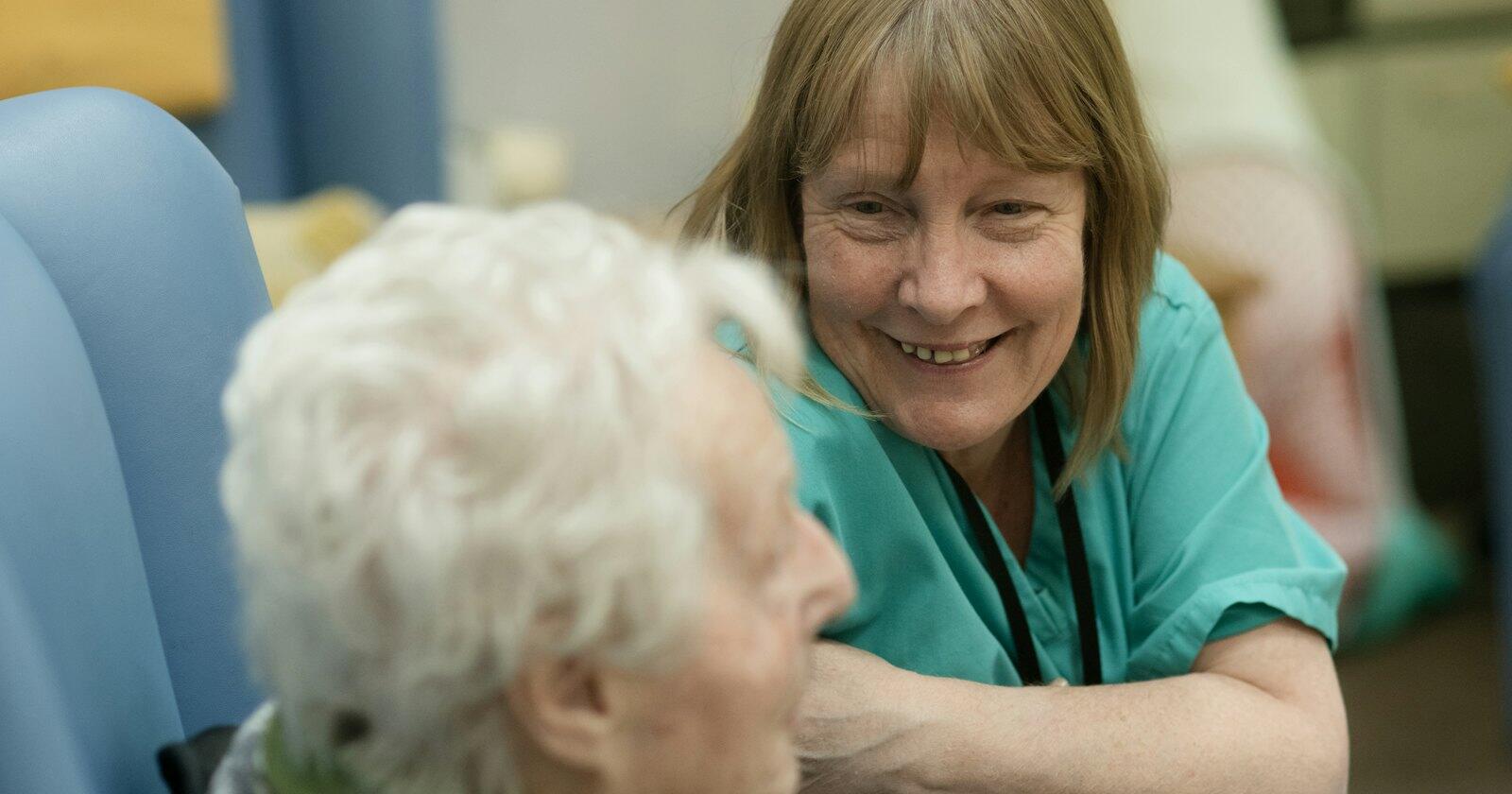
Skills for Care's figures for 2025/26, published on 14 October 2026, count 15,695 CQC-regulated home care locations in England, with an estimated 580,000 filled posts and 52,000 more unfilled. Every one of those services runs on a rota that changes during the day, and the changes reach two groups of people who need to hear about them: the carers doing the visits and the clients waiting at home for them. Home care visit texts serve both, though they follow different rules and shouldn't come from the same list.
Home care in numbers
Skills for Care counts domiciliary care, supported living and extra care housing together as "non-residential" services, all of which must be registered with CQC. In March 2026 there were 15,695 of them, an increase of 6,839, or 77%, since March 2018. Over the same years the number of care homes with nursing fell by 3% and care homes without nursing by 8%, which Skills for Care reads as "a trend of people receiving care in their own homes".
As at March each year, from the CQC care directory. Skills for Care counts domiciliary care, supported living and extra care housing services together as non-residential services.
Source: Skills for Care, domiciliary care services in the adult social care sector 2025/26, chart 1
See the figures as a table
| Locations | |
|---|---|
| 2018 | 8,856 |
| 2019 | 9,351 |
| 2020 | 9,860 |
| 2021 | 10,614 |
| 2022 | 11,516 |
| 2023 | 12,483 |
| 2024 | 13,733 |
| 2025 | 15,232 |
| 2026 | 15,695 |
CQC's own file for 2 November 2026 lists 14,479 active locations registered for the narrower "domiciliary care service" type, 851 of them marked dormant. The two counts use different definitions, and both show a large sector.
The workforce figures explain why so much of the day goes on the phone. Around 34% of home care staff were on zero-hours contracts in 2025/26, and 44% of care workers, against 10% in care homes. The turnover rate was 23.5%, an estimated 124,000 people leaving their role in a year, and 28.6% for care workers. The vacancy rate has come down from a peak of 12.8% in 2021/22 to 9.0%. A rota built on people who may not be guaranteed hours, with a quarter of the team changing every year and one post in eleven empty, gets rewritten often.
Two audiences, kept apart
The texts to carers are about work: a new rota, a cancelled visit, a call for cover, a change of client. The texts to clients and families are about care: who's coming, whether they're late, whether tomorrow's visit has moved. Keep them on separate lists, and ideally send them from different numbers or sender names, so that a carer's reply to "can anyone cover Mrs Patel at 17:00?" never lands in a client's thread, and a client never gets a message meant for staff.
Each audience brings its own risks. Staff texts carry other people's details. Client texts carry care details to phones that may be shared. Both get easier if the text says less and points to where the detail lives.
Texts to carers
The rota itself belongs in the rostering app, and the text tells someone to look at it. A change to one carer's day goes to that carer by name and asks for an answer ("Reply OK to confirm"), because a change nobody has acknowledged is a visit that might not happen. If no reply comes within the hour, ring. The same pattern runs through our page on staff alerts for other employers. A cover request is the text that does the most work, because it has to reach several people and settle on one:
Brookside Home Care: cover needed today 17:00 to 18:30, Hatfield area, 2 calls. Reply YES if you can take it. First yes gets it and we'll confirm.
Replies come back into a two-way inbox, where the coordinator sees who answered first and confirms them by name. Then send a short "covered, thanks" to everyone else on the request, so nobody sets off for a visit that's already been filled.
Leave the client's name, full address, health details and above all any key safe code out of a text to a carer. Those belong in the rostering app behind a login. A text can be forwarded, read over a shoulder at a bus stop, or sit on the phone of someone who left the agency last month, and with 124,000 leavers a year that last one isn't rare. Take leavers off the staff list on their last day.
The Employment Rights Act 2025 will give zero-hours workers a right to reasonable notice of shifts, and payment when shifts are cancelled or cut at short notice. The government's timeline, updated on 22 October 2026, says the timings for those rights "will be updated following the consultation process", so the notice periods aren't set yet. Our post on shift alerts by text goes through what the Act says. A dated text thread showing when each change was sent is a useful record to have either way.
Texts to clients and families
The most welcome text in home care is the late-running one. A visit window that slips by half an hour is a worry for someone waiting to get up, have lunch or take medication, and a text heads off the phone call:
Brookside Home Care: Sam is running about 25 minutes late for your 12:30 visit. Sorry for the wait. Reply or call 07700 900318 if you need us.
The new carer text matters too, because a stranger at the door is unsettling and some of the people being visited are wary of callers (with good reason):
Brookside Home Care: tomorrow's 08:00 visit will be with Jade, who is new to your rota. She'll show her Brookside ID badge at the door.
Some clients like to know the week ahead, especially when carers change often. A short weekly text, sent on the same day each week, does that without listing anything sensitive:
Brookside Home Care: your visits next week are at 08:00 and 17:30 each day. Mornings with Jade, evenings with Sam, except Thu evening with Priya.
If the client's family arranges the care, the same text to them saves a call to the office on Monday morning, as long as the client has agreed to it.
Who receives these needs the same care as in a care home. NHS England's information governance guidance says "where an appointment reminder is being sent, it should only be sent to the person who the appointment has been made for", with exceptions for a proxy with parental responsibility, a proxy under a best interests decision, or someone the person has explicitly agreed can receive messages, and "there should be notes written in the individual's health and care record" saying so. Plenty of home care clients would rather their son or daughter got the texts, and that's fine once it's agreed and recorded. Where a client lacks capacity, NHS England's social care guidance points to a health and welfare lasting power of attorney or a welfare deputy before anyone else. Our post on care home updates for families covers that in more detail.
Keep health detail out of these texts too. "Sam is running late" is enough; "Sam is running late for your insulin visit" says more than anyone holding the phone needs to know.
When a visit is missed
If a carer hasn't checked in at a visit, the first job is to find the carer and get someone to the client, and the second is to tell the person who's waiting. That second contact should normally be a phone call, because a missed visit can mean someone hasn't eaten or had their medication. A text can go alongside the call when the line is busy or nobody picks up:
Brookside Home Care: we're sorry, your 09:00 visit is late. A carer is on the way and should be with you by 09:40. We'll ring you shortly.
Write those templates now, while nobody's under pressure, and agree who in the office sends them. A template written at 09:15 on a bad morning tends to say either too much or too little.
Setting it up
Most rostering systems can call an SMS API when a visit changes or a carer checks in late. Ones that only send email can still trigger a text through email to SMS from a verified sender address. Either way, the client texts should come from the rota itself and not from a coordinator's memory, so the "running late" text goes out whenever the system knows someone is late.
Early starts need a little thought. Campaign quiet hours on CaptiFi Connect run from 21:00 to 09:00 London time by default, and a send to a saved list that starts inside them waits until 09:00. That suits a routine newsletter but not a 06:30 cover request for a 07:30 visit. Texts to individual numbers aren't held, and an API send to a list can set ignore_quiet_hours when it really can't wait. Each text gets a delivery report, so when a carer says they never got the message, the office can check.
Then decide who reads the replies out of hours. A "Reply or call" line invites a reply at 22:00 from a client who can't get back to sleep or a carer who's just seen tomorrow's change, and replies go to the shared inbox whether or not anyone is looking at it. Give the on-call coordinator access to the inbox on their phone, and say in the client's welcome pack which number to ring at night, because a text can't be the only way to reach the agency when something is wrong. For staff, a keyword can take some load off: a carer who texts ROTA could get an automatic reply pointing to the app and the office hours, which deals with a routine question without anyone getting out of bed.
Common questions
Can home care agencies text clients when a carer is running late?
Yes. A text about the client's own visit is a service message about their care, and NHS England's guidance says you don't need consent to message people about their individual care. Send it to the client, or to a family member the client has agreed can receive their messages, and keep health details out of it.
Should key safe codes be sent by text?
No. A text can be forwarded, seen on a lock screen or left on the phone of a carer who has since left. Keep key safe codes in the rostering app behind a login and change them when a carer leaves.
How many people work in home care in England?
Skills for Care estimates 580,000 filled posts in CQC-regulated home care services in 2025/26, with 52,000 vacancies. Around 34% of the workforce, and 44% of care workers, were on zero-hours contracts.
Can family members get texts about a relative's home care visits?
Yes, if the client agrees and it's noted on their care record. Where the client lacks capacity, NHS England's guidance looks first to a health and welfare lasting power of attorney or a welfare deputy, then to a best interests decision.
Sources
Read for this post on 4 November 2026.
- Skills for Care: Domiciliary care services in the adult social care sector 2025/26 (October 2026)
- Skills for Care: The state of the adult social care sector and workforce in England, published 14 October 2026
- CQC: Care directory with filters, HSCA active locations, 2 November 2026 (ODS)
- NHS England: Texting, emailing and messaging patients and service users, guidance for health and care professionals
- NHS England: Information sharing in social care
- GOV.UK: Plan to Make Work Pay and Employment Rights Act timeline, updated 22 October 2026
Written by the CaptiFi Connect team. Published 4 November 2026. More in Sectors
Send your first text this week
Set up your account and contacts now. Until we've approved it, a person reads each text before it goes out.