
Sectors8 min read
Takeaway and café order ready texts from the till
How a takeaway or café can send order ready texts from its till or online ordering system, what to put in them, and where the ICO draws the marketing line.
In short
- The ONS counted 125,660 restaurant and mobile food service sites in the UK in March 2026, and 58,380 of them had fewer than five employees.
- FSA guidance says food sold online or by phone needs allergen information both before the purchase is completed and when the food is delivered.
- In the ICO's own takeaway example, a marketing opt-out must be offered when the mobile number is collected, and an opt-out added later in the confirmation text does not count.
- The ICO says staff who take contact details verbally should specifically offer a choice of opting out, so a number taken at the counter needs the same question as a web form.
- An order ready text that only tells the customer their food is ready is a service message under ICO guidance, so it needs no marketing consent.
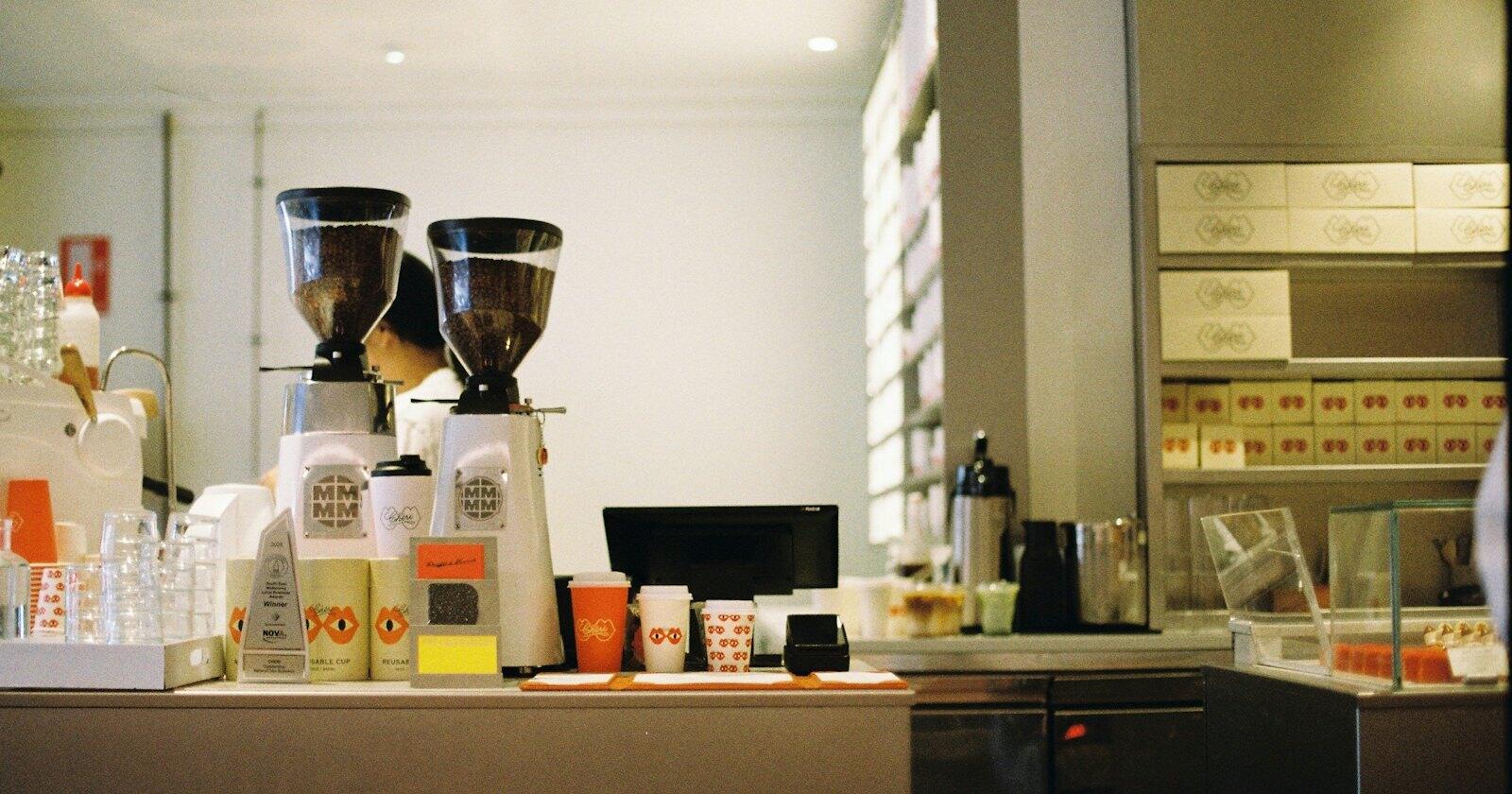
The ONS counted 125,660 restaurant and mobile food service sites in the UK in March 2026. That class of business takes in restaurants, cafés, takeaways and burger vans, and 58,380 of those sites had fewer than five people working there. A lot of them run on a till, a phone and somebody shouting a name across a queue. Order ready texts replace the shouting: the till (or the online ordering system) knows when an order is done, so it can tell the customer.
This post covers the practical side for a small food business: how a text gets from the till to a phone without a developer, what the three or four texts around an order should say, and where the line sits between a text about someone's chips and a text that counts as marketing.
How many, and how small
The ONS figures come from its yearly count of VAT and PAYE registered businesses, published on 24 September 2026 for March 2026. Class 5610 of the industry classification, "Restaurants and mobile food service activities", is where takeaways sit, and its 125,660 sites break down by size like this.
Local units (individual sites) of VAT or PAYE registered businesses in SIC class 5610, which covers restaurants, cafés, takeaways and mobile food stands. Counts are rounded to the nearest 5.
Source: ONS, UK business: activity, size and location 2026, table 19
See the figures as a table
| Local units | |
|---|---|
| 0 to 4 employees | 58,380 |
| 5 to 9 | 30,970 |
| 10 to 19 | 21,525 |
| 20 to 49 | 11,790 |
| 50 to 99 | 1,965 |
| 100 to 249 | 980 |
| 250 or more | 50 |
Nearly half have four employees or fewer, and another 30,970 have five to nine. The figures leave out the very smallest traders who aren't registered for VAT or PAYE, so the real number of tiny takeaways is higher still. The point for texting is that most of these businesses have no developer, so any system that needs code is a non-starter. They need something that works from the tools already on the counter.
Getting a text out of the till
There are two routes, and which one fits depends on what the till or ordering system can do.
The first is email. If your till or online ordering system can send an email when an order changes state (to the kitchen or the owner's inbox, say), it can send a text. With email to SMS, an email to the customer's number at sms.captificonnect.co.uk, sent from an address you've verified, goes out as a text. The email body is the text. If your ordering system lets you set the address and the wording of a notification email, that's the whole integration.
The second is an API call. Ordering systems that can call a web address when an order is marked ready (often listed as a webhook or a notification URL) can post straight to our SMS API: POST /messages with the number and the text. That route is better for anything busier than a single counter, because the order number can go in as client_ref and the delivery report comes back with it, and an Idempotency-Key such as order-317-ready stops a double tap on the "ready" button sending two texts.
Either way, the number comes from the customer when they order. On a web form it's a field. At the counter, it's a question, and the ICO has something to say about how that question is asked (below).
The texts around an order
A collection order needs two texts at most, and a delivery order three. For a café called The Copper Kettle:
The Copper Kettle: thanks Jo, order 317 is in. We'll text when it's ready, about 15 mins.
The Copper Kettle: order 317 is ready at the counter. Just give your name.
For delivery, the middle text changes and a third appears if things slip:
The Copper Kettle: order 317 has left with our driver and should be with you by 7:40pm.
The Copper Kettle: sorry, we're running about 15 mins late with order 317. New time around 7:55pm. Reply if you'd rather cancel.
Cafés that take orders ahead (the coffee and bacon roll ordered from the bus stop) usually need only the ready text, plus where to pick it up if the counter gets crowded:
The Copper Kettle: order 52 is ready on the collection shelf by the door. Enjoy!
A few habits keep these useful. The business name goes first, because a text from an unknown number about food reads like a mistake. The order number matches the ticket, so staff can find the bag. Times are given as times ("7:40pm"), not durations, because nobody remembers when "20 minutes" started. And the late text offers a way out, which is the reason people would otherwise phone. Replies land in a two-way inbox if you send from a number that takes replies, so "can you leave it with the neighbour?" reaches someone.
Getting the number right
A text only helps if the number is right, and numbers taken over a noisy counter or a crackly phone line often aren't. Read it back in pairs ("07700, 900, 317?") before the customer walks off. Our API accepts any common UK format, spaces and all, and anything it can't text comes back in a rejected list with a reason: invalid_number for a digit too few, not_mobile for a landline, unsupported_destination for an overseas number. None of those is charged. Every text that does go out gets a delivery report, so when someone says "I never got a text", staff can check what happened to it.
Late nights are fine, too. Our campaign quiet hours hold list sends between 21:00 and 09:00 London time by default, but they don't apply to texts sent one at a time, so the order ready text for a curry at 10:45pm goes when the bag's ready. A promotional send to your whole list at that hour would wait until the morning.
Allergens don't go in the text
Takeaways that sell online or by phone have an extra duty here. FSA guidance says that "If food is sold online or by phone through distance selling, allergen information must be provided at two stages in the order process": before the purchase is completed ("in writing (on a website, catalogue or menu) or orally (by phone)") and when the food is delivered ("allergen stickers on food or an enclosed copy of a menu", or by phone). The FSA's advice is to make written allergen information available both before ordering and on delivery, and to label takeaway meals clearly.
None of the forms the FSA lists for the delivery stage is a text message, so keep the labels and the enclosed menu exactly as they are. A text is a bad place for allergen detail anyway. It's short, it may be read by someone other than the person eating, and a phrase like "nut free" in a notification is a promise the kitchen has to stand behind. If a customer replies with an allergy question, answer it by phone.
Service text or marketing?
An order ready text is a service message. The ICO describes service messages as those "for administrative or customer services purposes", and a text saying someone's food is ready is about as administrative as it gets. No consent is needed.
The ICO's guidance on electronic mail marketing uses a takeaway for its main example of where that stops. A customer orders "a takeaway pizza online" and gives a mobile number. In the good version, the order form carries a box: "We'd like to send you marketing text messages about our special offers. If you don't want to receive these please tick here." The customer ticks it, gets the order confirmation text and no marketing. In the bad version, there's no box, and the confirmation text "also tells them how to opt out of future marketing messages". The ICO's conclusion: "The company did not provide this way of opting out until after they had collected the customer's contact details. Any further marketing text messages would breach PECR."
So if you'd ever like to text regulars about a Tuesday deal, the opt-out has to be offered when the number is first taken, which is the soft opt-in in regulation 22(3) of PECR. That's easy on a web form and easy to forget at the counter. The ICO covers that too: "Staff taking down details verbally should specifically offer a choice of opting out." In practice, the person at the till asks two things: "What's your mobile, for when it's ready?" and "Are you happy for us to text you the odd offer? You can say no." Record the answer next to the number.
The same guidance has a warning that fits a busy café. Its bad practice example is a restaurant that takes a mobile number "in case they need to contact them about the booking and to send a confirmation message", then texts an advert for a special event a few days later. Collecting a number for one purpose doesn't make it a marketing list. Our post on restaurant booking texts covers the booking side of that.
What it costs, and keeping it simple
On our smallest pack, 500 credits for £25, a one-part text costs 5p, so a two-text collection order costs 10p. Keep each text inside one part (160 characters in the standard character set) and the arithmetic stays that simple. The examples above are all well under.
Don't over-engineer it. Most small takeaways need the ready text and nothing else, sent from the button staff already press. Add the "on its way" and "running late" texts only if you deliver, and add marketing only once the opt-out question is part of every order. Our restaurants page has more of the day-to-day texts a food business sends.
Common questions
Can my till send a text when an order is ready?
If it can send an email or call a web address when an order changes, yes. An email to the customer's number at an email to SMS address goes out as a text, and an ordering system with a webhook can call an SMS API directly.
Do I need consent to text a customer that their takeaway is ready?
No. A text that only tells a customer their order is ready, on its way or delayed is a service message, which the ICO treats as outside the direct marketing rules. Adding an offer to it makes it marketing.
Can I use takeaway customers' numbers for offers?
Only if they were given a clear chance to opt out of marketing texts when they gave you the number, and didn't take it, or if they gave consent. The ICO's guidance uses a takeaway pizza order as its example, and an opt-out offered for the first time in the confirmation text is too late.
Should a takeaway order text include allergen information?
No. FSA guidance says allergen information for food sold online or by phone must be given before the order is completed and when the food is delivered, in writing such as labels or a menu, or by phone. Keep it there, and answer allergy questions by phone.
Sources
Read for this post on 4 November 2026.
- ONS: UK business, activity, size and location, 2026 workbook
- ONS: UK business, activity, size and location, 2026 bulletin
- FSA: Allergen guidance for food businesses, updated 17 July 2026
- ICO: How do we comply with the PECR electronic mail marketing rules?
- ICO: direct marketing guidance, identifying direct marketing
- legislation.gov.uk: PECR 2003, regulation 22
Written by the CaptiFi Connect team. Published 4 November 2026. More in Sectors
Send your first text this week
Set up your account and contacts now. Until we've approved it, a person reads each text before it goes out.